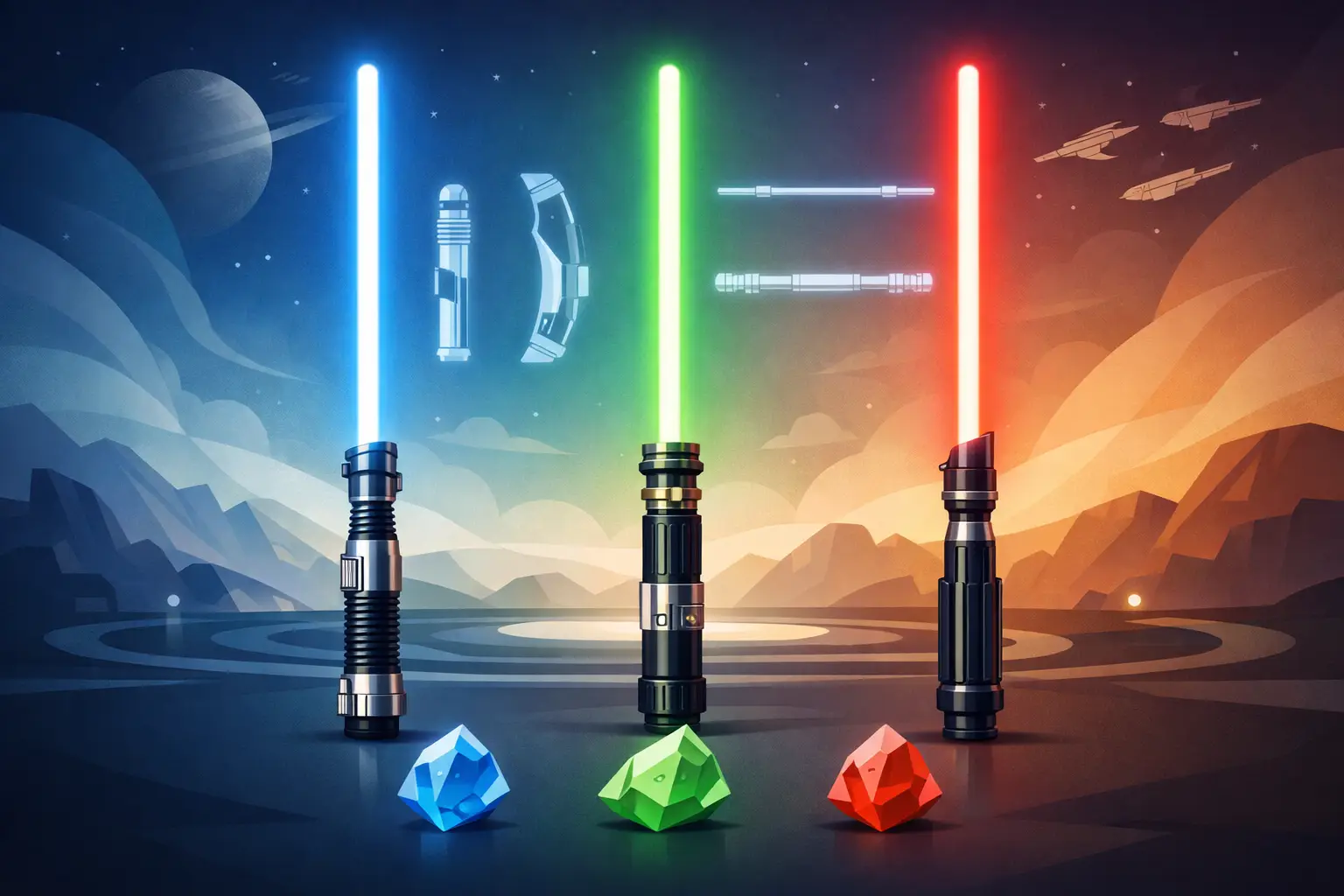
A blade can turn the same hilt into a wall-worthy display piece, a convention-ready cosplay prop, or something you can confidently bring to a friendly duel. If you are asking, which lightsaber blade should I buy, start with how you plan to use the saber - not just the color you want.
The right blade needs to match your hilt, electronics, and expectations. A bright pixel blade looks incredible when igniting in a dark room, while a durable base-lit blade may be the smarter call for repeated contact. Neither is automatically better. The best choice is the one that lets your inner Jedi, Grey Jedi, or Sith use the saber the way you actually intend to.
Start With Your Main Mission
Most buyers fall into one of four camps: display collectors, cosplayers, gift buyers, and duelists. There is plenty of overlap, but choosing a primary purpose makes the decision much easier.
For display, visual effects tend to matter most. You may want a blade that produces a bright, even glow and supports scrolling ignition, flicker, blaster effects, and color changes. For cosplay, brightness and screen-ready appearance matter, but blade length and how easily the saber travels can be just as important.
For younger fans and first-time owners, durability, simple operation, and a manageable size usually matter more than advanced effects. A Youngling or Padawan setup should feel exciting without feeling fragile or difficult to handle. For dueling, the question changes: you need a blade designed to take sensible recreational contact, paired with a hilt and blade retention system built for that purpose.
Pixel vs. Base-Lit: Which Lightsaber Blade Should You Buy?
Your first technical choice is usually between a pixel blade and a base-lit blade. This is where a lot of shoppers get stuck, but the difference is straightforward.
Pixel blades for maximum visual impact
A pixel blade contains LEDs throughout the blade itself. Because the light comes from inside the full length of the blade, the illumination is generally more even and more vivid. Pixel setups can create animated ignition and retraction, localized blaster impacts, unstable blade effects, and other details that make a saber feel especially cinematic.
Choose a pixel blade if your priorities are collecting, display, cosplay, photos, or immersive sound-and-light effects. It is the natural choice for a Jedi ceremony pose, a red Sith reveal, or a character-inspired saber you want to show off.
The trade-off is that pixel blades contain more electronics. They should be handled with care, especially at the blade connector. Some pixel-equipped sabers can be used for light to moderate choreographed contact when the blade and hilt are rated accordingly, but they are not the first choice for hard, repeated impacts. If serious dueling is your main mission, spending extra for pixel effects may not be the best use of your budget.
Base-lit blades for practical dueling and value
A base-lit blade gets its light from a powerful LED in the emitter of the hilt. The blade itself is a durable tube that carries and diffuses that light. Base-lit blades are usually more affordable, simpler to replace, and better suited to regular recreational dueling.
They can still look great, particularly in lower light. You will get color, sound, flash-on-clash, and a satisfying illuminated blade without placing electronics inside the tube. That makes a base-lit setup a strong option for a Padawan’s first saber, a gift that will see lots of backyard battles, or anyone who wants a dependable dueling companion.
The trade-off is visual precision. Because the light begins at the hilt, the tip may not appear as evenly bright as a pixel blade, particularly in bright sunlight. You also will not get the same full-length ignition animations. For many duelists, that is a very fair exchange for durability and lower replacement cost.
Choose a Blade Length That Fits the User
A longer blade is not always a better blade. It changes balance, reach, storage, and how comfortable the saber feels in motion.
For most teens and adults, a 32-inch blade is a reliable all-around choice. It delivers the familiar full-size look while remaining manageable for cosplay, posing, and recreational dueling. A 36-inch blade offers more reach and a dramatic silhouette, but it can feel less balanced in a shorter hilt or crowded room.
For younger users, a shorter blade is usually the better answer. A 24-inch or 28-inch option is easier to control and less likely to bump furniture, doorframes, or fellow rebels. It also makes the hilt feel less front-heavy. Parents buying a Youngling or Padawan saber should think about control before chasing the biggest possible blade.
If you plan to carry your saber through a convention, measure your storage and transportation options before buying. A removable blade helps, but a shorter length can save a lot of hassle in a car, hotel room, or busy event space.
Confirm Diameter and Connection Compatibility
Before ordering any replacement or upgrade blade, check your hilt’s blade socket diameter and electronic setup. Many sabers use a one-inch blade, while some use a thinner 7/8-inch blade for a more refined, screen-inspired look. A blade that is even slightly too wide simply will not fit, and a blade that is too narrow will not stay secure.
You also need to match the blade to the hilt’s lighting system. A pixel blade requires a pixel-compatible hilt and connector. A base-lit hilt uses a standard hollow blade. They are not interchangeable just because the outside diameter looks right.
Look at the depth of the blade socket as well. A deep emitter provides more blade support and is generally preferable for contact use. A shallow socket can still be excellent for display or cosplay, but it puts more stress on the blade retention point during impacts.
The retention screws matter, too. Tighten them firmly enough to prevent wobble, but do not overtighten them into the blade wall. A secure blade should feel stable without being crushed or scarred by the screws.
Think About Diffusion, Brightness, and Color
Blade diffusion is what transforms individual LEDs or a bright hilt light into a solid-looking beam. A good diffuser helps prevent visible hot spots and gives the blade a cleaner appearance in photos and at night.
For base-lit blades, diffusion quality makes a noticeable difference in how evenly the color travels toward the tip. For pixel blades, it contributes to that smooth, nearly continuous glow collectors love. If you want a strong color on camera, especially classic blue, green, purple, or a Sith red, choose the blade designed for your specific electronics rather than trying to mix parts from unrelated systems.
Brightness also depends on where you use the saber. Almost every illuminated blade looks stronger indoors or after dark. Direct sunlight is demanding for any saber, including premium pixel setups. If daytime outdoor cosplay is your priority, manage expectations and focus on a blade that is durable, properly fitted, and visually clean at close range.
A Dueling Blade Needs More Than a Tough Tube
It is tempting to label any thick-walled blade as “duel-ready” and call it done. In reality, safe, enjoyable dueling depends on the whole saber. The hilt needs a secure emitter, the blade must be properly retained, and the user needs reasonable expectations.
Recreational dueling means controlled strikes with another person who is also using suitable gear. It does not mean striking trees, concrete, metal railings, or using the saber as a full-force impact tool. Even a heavy-grade blade can crack, loosen, or damage internal components if it is abused.
If dueling is your priority, choose a base-lit blade with a durable wall thickness, a compatible hilt with a deep socket, and a length you can control. A 32-inch blade is often the sweet spot for adult recreational dueling. If your goal is choreographed scenes rather than impact-heavy sparring, a pixel blade may still be worth it for the effects alone.
Make the Purchase Feel Worry-Free
A replacement blade is only fun when it arrives ready to fit the saber you own. Before you check out, verify the blade type, diameter, length, and whether your hilt is pixel or base-lit. If you are buying for someone else, ask what saber they have rather than guessing from photos.
It also helps to buy from a retailer that can answer a real compatibility question before and after the sale. SaberBros personally inspects sabers before shipment and backs U.S. orders with free shipping, warranty protection, and accessible human support. That matters when you are choosing an electronic component instead of a generic costume accessory.
Pick the blade that matches the moments you want to have with it. A bright pixel blade can make a display shelf feel like a scene from the saga; a dependable base-lit blade can survive countless Padawan training sessions. Either way, the right fit is the one you will be excited to ignite again tomorrow.