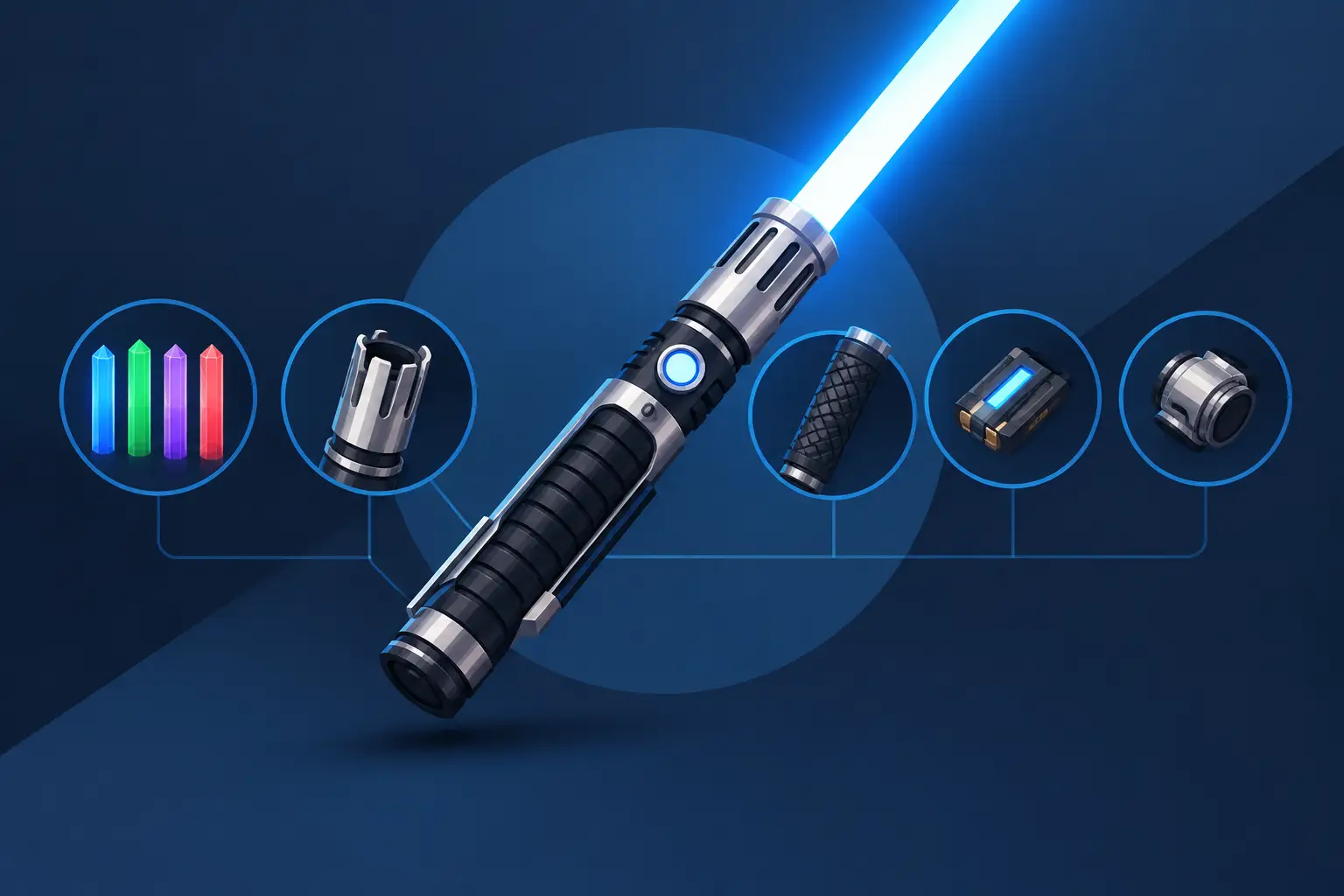
Your first saber does not need every premium feature to feel special. But once you have heard a motion-responsive hum, seen a bright blade fill a dark room, or felt a hilt sit securely in your hand during drills, you understand why the right upgrades matter. The best top saber upgrades are not always the most expensive ones - they are the parts that match how you actually use your saber.
A display collector, a cosplayer, and a weekend duelist can start with the same hilt and need completely different things. Before buying components, decide where your saber spends most of its time: on a wall stand, at conventions, in photos and videos, or in active sparring. That one decision keeps your upgrade budget focused.
Top Saber Upgrades to Prioritize First
For most owners, the smart order is blade performance first, electronics second, and comfort or connection hardware third. A premium soundboard is exciting, but it will not solve a blade that is too dim for your display space or too fragile for your style of dueling.
1. A blade built for your use case
The blade is the most visible part of the saber and often the first upgrade you will notice. If your saber is mainly for display, cosplay, or cinematic photos, a pixel blade is hard to beat. LEDs running through the blade create a more even, vivid glow and can support effects such as ignition animations, unstable blade textures, blaster impacts, and color transitions.
That visual payoff comes with trade-offs. Pixel blades cost more than standard baselit blades, draw more power, and contain electronics throughout the tube. They can handle normal use, but serious contact dueling calls for more caution than a dedicated heavy-grade baselit blade.
For frequent sparring, prioritize wall thickness and a secure blade retention system over advanced effects. A strong blade that remains stable in the emitter is more valuable than a feature-packed blade that you hesitate to use. Blade length matters, too. A 36-inch blade offers a classic look and reach for many adult users, while shorter options can be easier for younger Padawans, tighter convention spaces, and faster practice movements.
2. A soundboard that reacts to movement
If you want your saber to feel alive rather than simply lit, upgrade the electronics core or soundboard. Better boards use motion sensing to respond to swings, clashes, and changes in blade angle. The result is a hum that shifts with your movement instead of playing like a fixed audio track.
Look for smooth swing performance if immersion is your priority. This feature blends swing audio naturally as you move, making slow flourishes, quick cuts, and guard transitions feel more connected. Sound fonts, volume controls, blade-color settings, and configurable effects are also worth considering for collectors who enjoy changing the personality of one hilt.
More features are not automatically better for every buyer. A Youngling saber or a straightforward combat build may benefit more from dependable controls and a loud, clear speaker than from deep menu customization. If you do choose an advanced core, make sure you are comfortable learning its button controls or app settings. A powerful soundboard is only fun when you can confidently use it.
3. A better speaker for the sound you paid for
A quality soundboard deserves a speaker that can carry its detail. A weak or undersized speaker can make even a great sound font feel thin, especially in a busy room. Upgrading to a properly matched speaker can add clearer ignition sounds, fuller bass presence, and sharper clash effects.
Fit is the deciding factor here. Speaker diameter, depth, wiring, and the internal shape of the pommel all affect compatibility. A speaker with impressive specifications on paper may not fit the hilt or may perform poorly if it is squeezed into the wrong chamber. When in doubt, choose a component specifically intended for your saber platform rather than forcing a universal part into place.
Also consider where you use the saber. For quiet indoor display, extreme volume is unnecessary. For cosplay events, backyard choreography, or a Sith entrance that needs to be heard over a crowd, a stronger speaker becomes much more worthwhile.
4. A rechargeable battery setup you can trust
Battery upgrades are less glamorous than blade effects, but they can make ownership much easier. Higher-performance electronics and pixel blades demand more power, so a reliable rechargeable battery is essential for consistent runtime. Use the battery type and voltage specified for your core. Substituting an incompatible cell can damage electronics or create a safety issue.
A spare approved battery can be useful for conventions, events, and long filming days, provided your saber is designed for easy battery access. Otherwise, a proper charging routine is the better investment. Charge with the recommended cable or charger, avoid leaving batteries unattended for long periods, and store the saber with care if it will sit unused for months.
Think of battery capacity as convenience, not an excuse to ignore power management. Bright blades, loud speakers, and intensive effects will shorten runtime. Keeping brightness at a sensible level can extend your session without taking away the experience.
Hilt Upgrades That Make a Saber Feel Personal
A saber can look perfect in product photos and still feel wrong in your hand. Hilt-focused upgrades are where a standard Jedi, Grey Jedi, or Sith build begins to feel like your own.
Grip wraps, leather-style grips, and textured sections can improve control while adding character. They are especially helpful on smooth metal hilts used for choreography or light sparring. The goal is a secure grip without creating bulky areas that interfere with hand placement.
Emitter and pommel choices shape the silhouette of the hilt, while small details such as buttons, clamps, and accent pieces can push a build toward a clean Jedi profile or a more aggressive Sith presence. Be practical about protruding parts. A dramatic control box may look incredible on a display stand, but it can catch on gloves, costume fabric, or your hand during spins.
Balance deserves attention as well. A longer blade, heavier emitter, or oversized pommel can change how quickly a saber turns. There is no universal ideal. Some duelists prefer a forward-weighted feel for powerful cuts, while others want a neutral balance for fast transitions. If possible, make one change at a time so you can feel what actually improves your handling.
Connectors and Dual Saber Setups
A coupler or connector is a natural upgrade for fans building a staff-style saber. Two compatible hilts can create an imposing double-bladed setup for display, choreography, and character-inspired cosplay. It also gives you the flexibility to separate the hilts and use them individually.
Compatibility is critical. Thread type, diameter, switch placement, and pommel design all matter. Do not assume two sabers will connect just because they look similar. A loose or poorly matched connector can create wobble, damage threads, or make a staff feel unsafe during movement.
Staff setups also amplify the need for good balance and adequate space. They look spectacular, but they require more room than a single blade and are not the easiest place for a beginner to start. For many Padawans, mastering one hilt first leads to safer, cleaner technique later.
Choose Upgrades Around Your Budget and Goal
If you are working with a limited budget, spend it where you will see and feel the difference most. A display-first buyer may get the biggest return from a pixel blade and enhanced sound. A duelist may be happier with a heavy-grade blade, secure retention screws, and a grip upgrade. A collector building a signature character look may value hilt details over electronics.
Avoid buying upgrades simply because they sound premium. A high-end core, a staff coupler, and a long pixel blade can each be excellent choices, yet together they may create a setup that is heavier, more complicated, and less suited to your intended use. The right build should invite you to pick it up, not make you worry about preserving it.
Before ordering, confirm blade diameter, core connection style, battery requirements, available internal space, and whether the component is intended for your level of contact use. For a purchase that needs a second opinion, SaberBros offers real customer support from people who understand that compatibility questions are part of building a saber you will enjoy.
Start with the one upgrade that fixes your biggest limitation. When your blade looks right, your sound responds to your movement, or your hilt finally feels secure in your hand, the Force of a well-chosen upgrade is hard to ignore.