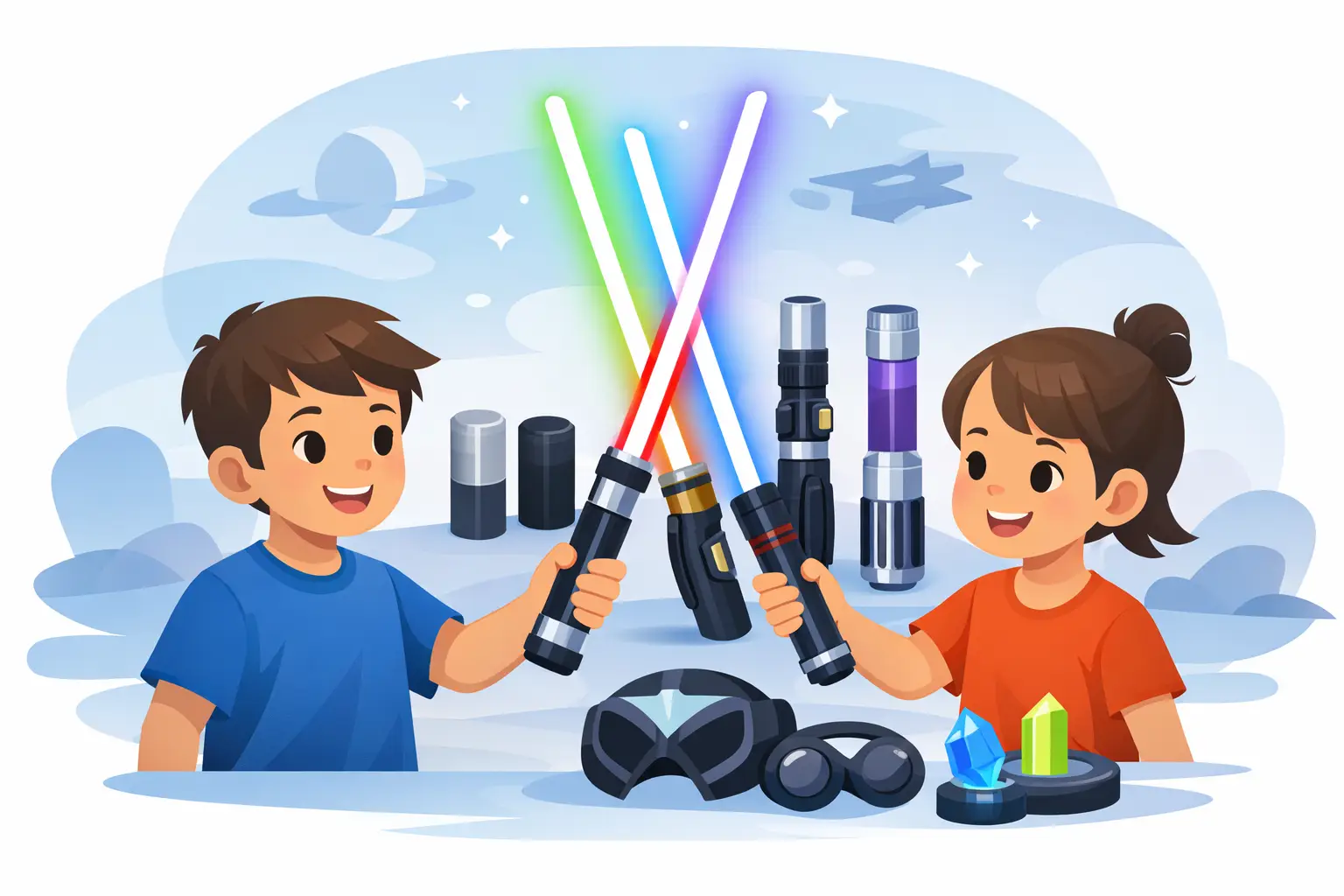
A starter lightsaber set for kids should create the right first saber moment: the color ignites, the sound kicks in, and your Youngling suddenly has a mission. But the best first set is not automatically the brightest, loudest, or most feature-packed option. For parents, the real win is a saber that feels special to open, simple to use, and appropriate for the kind of play your child actually has in mind.
That might mean costume adventures around the house, carefully choreographed duels with a sibling, or a birthday gift that starts a full-on Padawan collection. Choosing well comes down to age, play style, comfort, and how much durability you need from the first blade.
What a Starter Lightsaber Set for Kids Should Include
A starter set should remove the guesswork from a first purchase. Rather than asking a new fan to figure out a hilt, blade, charging setup, and accessories separately, a well-matched set gives them the core pieces needed to begin. For many families, that means one complete saber with a blade and charging equipment. For siblings or friends who want to train together, a two-saber set can make more sense.
The word “set” matters because it should match the experience you are buying. A single saber is a great choice for a child focused on cosplay, display, or imaginary Jedi missions. A paired set is more practical when the main goal is shared play. Buying two unrelated sabers can work, but matching models often provide a more balanced feel and a simpler setup for first-time users.
At the Youngling and Padawan level, keep the focus on the essentials: a manageable hilt, a comfortable grip, a blade that is not overly long for the child, and controls they can learn without turning every play session into a troubleshooting session. Advanced sound fonts, deep customization, and intricate character styling can be exciting later. A first saber should feel inviting from the first ignition.
Start With the Child, Not the Feature List
A child who wants to pose for photos, wear a costume, and re-create favorite scenes has different needs than a child who wants to practice choreographed strikes in the backyard. Both are valid uses, but they point toward different starter options.
For younger children, a lighter, simpler build is usually the better call. A hilt that feels oversized can make even a beautiful saber frustrating to hold. Shorter blades can also be easier to control indoors, where ceiling fans, lamps, and furniture tend to become unexpected members of the duel.
Older kids and teens may appreciate a more substantial Padawan-style saber, especially if they are interested in learning controlled sparring or using it for cosplay. They can generally handle more settings and may care more about a metal hilt, responsive sound effects, and a brighter blade. Even then, more features are not always better. A teen who wants a dependable dueling saber may get more use from a solid, straightforward build than from a complicated model they hesitate to take outside.
Ask a few practical questions before choosing: Will this saber mostly stay indoors? Is it a solo gift or part of a sibling set? Does the child want Jedi blue and green energy, Sith red intensity, or the freedom to switch colors? Are they looking for a costume piece, a display collectible, or something meant for active recreational dueling? Those answers narrow the field quickly.
One Saber or Two?
A two-saber starter set has obvious appeal. It turns gift opening into an instant duel, gives siblings equal gear, and avoids the classic problem of one child holding the saber while everyone else grabs a cardboard tube. It also works well for a parent and child who want to learn safe, simple choreography together.
Still, two sabers are not automatically the best value for every family. If one child is the clear fan, investing in one higher-quality starter saber may be more meaningful than dividing the budget between two models. It depends on whether shared play or individual ownership is the priority.
Choose a Build That Matches Play Style
Not every lightsaber is designed for the same kind of contact. A decorative or costume-focused saber can look fantastic but may not be the right tool for repeated impacts. A saber intended for recreational dueling should have a blade and connection system suited to that use. Parents should treat those categories differently rather than assuming every illuminated blade is built for sparring.
For first-time buyers, a practical middle ground is often best: a durable starter saber that can handle normal supervised play while still looking impressive for a costume or bedroom display. It gives a child room to grow without requiring you to buy a replacement the moment they want to try a few choreographed moves.
Even a well-built saber needs sensible use. Establish a few rules early: no striking faces or hands, no swinging near pets, no dueling around breakable objects, and no using a blade outdoors where footing is uneven. Lightsaber play is more fun when everyone knows the goal is a great scene, not a hard hit.
Blade length is another trade-off worth considering. A longer blade looks dramatic and can feel more screen-inspired for an older Padawan. But a shorter blade gives younger kids better control and is much easier to manage in a living room. There is no universal right length. Match the saber to the child’s reach and the spaces where they will use it most.
Why Sound, Color, and Controls Matter
For kids, the ignition moment is a major part of the experience. Sound effects, motion response, and a bright blade can make a starter saber feel far more immersive than a basic toy. Those features are worth having when they are easy to access and do not get in the way of play.
Color-changing options are especially useful for a first saber because a child does not have to commit forever to one path. Today they may be a green-bladed Jedi. Tomorrow, they may decide a red Sith blade better fits their imaginary character. A configurable color setting lets the saber evolve with the story they want to tell.
The trade-off is that advanced electronics can require more care. Rechargeable models need charging habits, and extra functions take a little time to learn. That is not a reason to avoid them. It is simply a reason to choose a model with understandable controls and to help younger children get comfortable with the basics before exploring every setting.
A good first lesson is simple: turn it on, choose a favorite color, practice a few controlled movements, then power it down after play. That routine protects battery life and makes the saber feel like gear a young Jedi is responsible for, not just another toy tossed into a bin.
Gift Confidence Matters as Much as the Saber
A lightsaber is often bought for a birthday, holiday, milestone, or costume event with a fixed date. That makes the ownership experience part of the product. Parents should look for clear information about what is included, how the saber is checked before shipment, and what happens if they need help after it arrives.
SaberBros is a U.S.-based family business that personally inspects sabers before shipping, offers free domestic shipping, warranty protection, and real support by email and phone. That kind of direct accountability is especially valuable for a first purchase, when you may not know what a blade connection should feel like or which settings are normal.
Before giving the saber, take a few minutes to charge it if needed, test the ignition, and make sure the child knows where it will be stored. If it is a surprise gift, this small bit of preparation means the first activation happens when the moment is ready - not after a search for a cable or a battery charge.
Let Their First Saber Leave Room to Grow
The best starter choice does not have to be the final saber in a collection. A Youngling may begin with a simple, versatile hilt and later want a more detailed Jedi design, a balanced Grey Jedi build, or a bold Sith saber with a red blade. Starting with a reliable option gives them time to learn what they actually enjoy.
That is the real value of a thoughtful first set. It is not only about opening a box with a glowing blade inside. It is about giving a young fan something they can carry into costumes, family duels, backyard training sessions, and the stories they build for themselves.