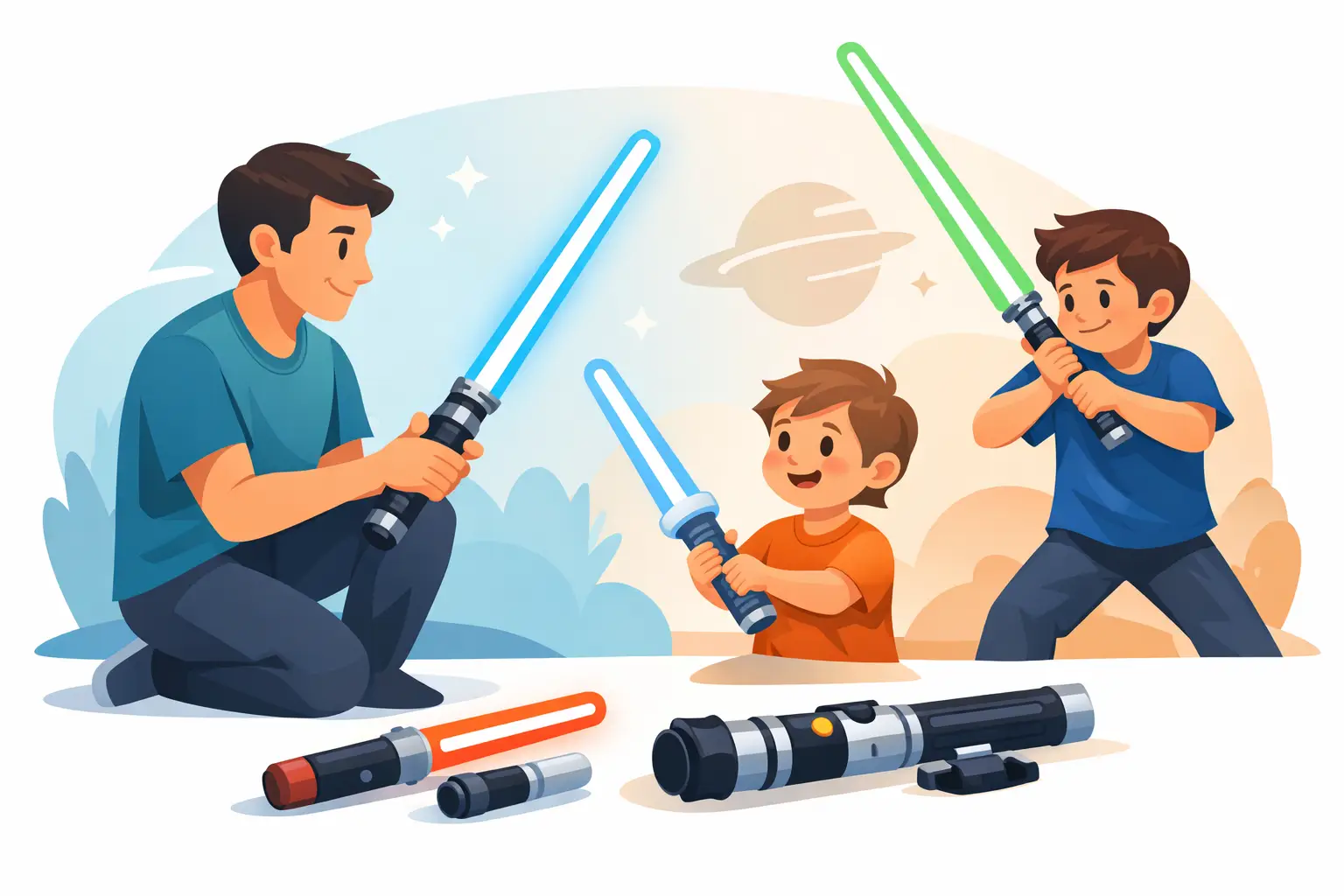
The moment a child grips a lightsaber, the living room can become a starship corridor, a Jedi temple, or the final round of a backyard duel. This parent guide to kids lightsabers helps you choose a saber that keeps that excitement intact without buying too much saber, too little durability, or the wrong features for your child’s age.
A kids lightsaber is not a one-size-fits-all toy. A five-year-old who wants to reenact favorite scenes has different needs than a ten-year-old practicing choreographed moves with friends. The best choice starts with how your child will actually use it: imaginative play, costume events, light sparring, or regular dueling.
Start With Your Child, Not the Brightest Feature List
Sound effects, color changes, and movie-inspired hilts are fun, but fit and intended use matter first. A saber that is too long feels awkward, even if it has every sound font in the galaxy. A heavy metal hilt can feel premium in an adult hand yet become tiring or difficult for a younger child to control.
For most younger fans, a Youngling-style starter saber makes the most sense. These models prioritize approachable handling and simple operation, giving kids the glow and sound they want without turning every play session into a settings tutorial. A Padawan option can be a better next step for children who are older, more coordinated, or beginning to take cosplay and light practice more seriously.
Ask a few simple questions before you shop. Does your child usually play indoors, outdoors, or both? Will they be swinging alone, posing for photos, or dueling with a sibling? Are they careful with their gear, or does every toy eventually take a tumble down the stairs? Honest answers will point you toward the right level of durability and features.
Parent Guide to Kids Lightsabers by Age and Experience
Age recommendations vary by child, so use these ranges as a starting point rather than a hard rule. Height, coordination, patience, and supervision all matter.
Ages 4 to 6: Keep It Light and Simple
At this age, the best lightsaber is easy to hold, easy to activate, and not intimidating. Shorter blades are generally more manageable in bedrooms, hallways, and crowded costume events. Look for a comfortable grip and controls that do not require multiple button combinations.
A simple illuminated saber supports imaginative play beautifully. Your child does not need a long list of blade modes to feel like a Jedi. In fact, fewer settings can mean less frustration and more play. This is also the age when adult supervision is most necessary, especially around pets, younger siblings, furniture, and windows.
Ages 7 to 9: Ready for Padawan Training
Many children in this range can handle a slightly more substantial saber, particularly if they have practiced with sports equipment, dance props, or other hand-held toys. They may care more about choosing a blade color, hearing ignition sounds, and matching a favorite Jedi or Sith-inspired look.
This is a good stage for a durable starter saber designed for light-contact play. “Light contact” is the key phrase. Even a well-built saber is not permission for uncontrolled full-power swings. Set expectations before the first duel, not after someone gets hit on the knuckles.
Ages 10 to 12: Features and Training Matter More
Older kids often want a saber that feels less like a toy and more like a piece of gear. They may be ready for a stronger hilt, richer sound, more color options, or a design that reflects their preferred path - Jedi, Grey Jedi, or Sith.
If your child is asking to choreograph fights, attend conventions, or practice regularly with friends, consider a combat-capable model built for that purpose. The trade-off is that tougher construction can add weight. Let your child hold a similar-sized object if possible, and remember that a lighter saber they can control is safer than a heavier saber that looks impressive on a shelf.
Teens: Choose for the Hobby They Are Building
Teen buyers often know exactly what they want, whether that is a screen-inspired hilt, a red-blade Sith presence, or a balanced dueling setup. At this stage, a saber can become part collectible, part cosplay centerpiece, and part recreational training tool.
A more advanced saber may be worth the investment when they will maintain it, use it consistently, and appreciate upgrade options. Still, the same practical rule applies: match the saber to the activity. A display-focused collectible, a convention prop, and a full-contact dueling saber are not always the same thing.
Blade Length Is a Safety Decision
Blade length affects control as much as appearance. A long blade creates a dramatic silhouette, but it has a wider swing arc and is easier to clip on furniture, ceilings, or another person’s arm. For younger or shorter children, a shorter blade usually creates a much better first experience.
Think about where the saber will live, too. A child playing in a small apartment or a busy family room may need a more compact setup than a child with a clear backyard practice area. If the saber is mainly for Halloween, photos, or conventions, choose the length that looks right with the costume and is comfortable for walking through a crowd.
For dueling, both participants should use comparable equipment and follow the same rules. A major difference in blade length, weight, or build can make a casual match feel uneven and increase the chance of accidental hard hits.
Set Clear Saber Rules Before the First Duel
Lightsabers are more fun when everyone knows the boundaries. A short family rule set prevents the usual problems: swinging near faces, dueling in tight spaces, or treating a charger and battery like an afterthought.
Use these four rules from day one:
- No strikes to the head, face, neck, hands, or groin.
- No dueling around people who are not playing, pets, fragile furniture, or traffic.
- Use controlled swings, not baseball-bat power.
- Stop immediately if a blade, hilt, or charging cable appears damaged.
Eye protection can be a sensible addition for organized sparring, especially with older kids and more durable combat sabers. It may feel overly serious for a quick backyard showdown, but it is a small precaution that makes repeated practice more comfortable for parents and players alike.
Choose Features That Your Child Will Actually Use
The best feature set depends on attention span and experience. Young children often enjoy bright illumination, an easy on-off control, and a few satisfying sound effects. Older children and teens may get real value from multiple colors, motion-responsive sounds, volume adjustment, flash effects, and removable blades.
More features can also mean more learning, more charging, and more opportunities to press the wrong button. If your child enjoys figuring out settings and personalizing gear, that is part of the fun. If they want to open the box and start their mission immediately, simpler is better.
Sound volume deserves special attention. A saber that sounds amazing in a product video can become a lot in a small home. Choose a model with adjustable volume when possible, and establish a quiet-hours setting that keeps everyone on the light side of the Force.
Durability, Charging, and Care
A child’s saber should be treated as equipment, not indestructible plumbing. Even combat-ready sabers need reasonable use and basic care. Teach your child to avoid hard impacts against concrete, metal railings, trees, and other fixed surfaces. Those hits can scratch the hilt, damage the blade, or strain internal components.
Charging is a parent responsibility for younger children. Follow the included charging guidance, use the appropriate cable, and avoid leaving a charging saber unattended for long periods. If the saber has removable batteries or electronics, make sure the child understands that the hilt is not meant to be opened casually.
Storage matters more than it seems. Keep the saber in a dry place, away from extreme heat and out of reach of very young siblings. Remove it from the car after a convention or event rather than leaving it in summer heat. A little care protects both the electronics and the excitement of owning something special.
Buy From a Seller That Supports Parents Too
A lightsaber purchase is easier when the seller makes ownership straightforward. For a first saber, parents benefit from clear product descriptions that distinguish starter play, cosplay, display, and combat use. They also need accessible help if a question comes up about setup, charging, or choosing the right blade.
SaberBros is built around that kind of confidence, with personal pre-shipment inspection, warranty protection, and real support by email and phone. Those details matter when you are buying a gift for a child and want it to arrive ready for its big reveal, not as another project waiting on the kitchen table.
Your child does not need the most expensive saber in the galaxy to make lasting memories. Choose one they can hold comfortably, use responsibly, and grow into with confidence. The right first lightsaber turns a costume accessory into an invitation to play, practice, and tell their own story.