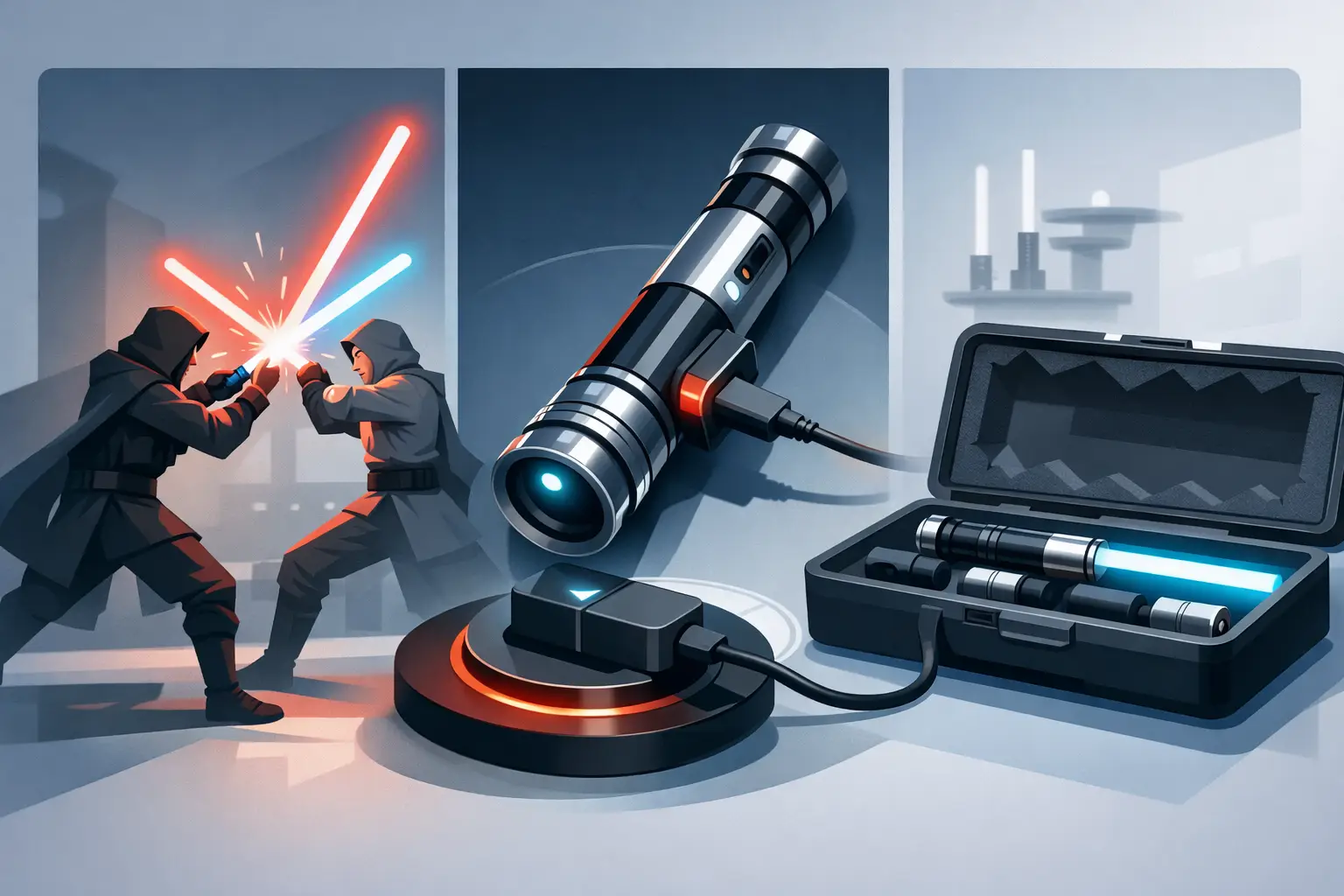
A Neopixel saber can light up a room, deliver movie-worthy effects, and make a duel feel far more immersive. That power also means neopixel saber safety deserves more attention than simply turning the saber on and swinging it. A few smart habits protect the electronics, extend battery life, and help everyone around you enjoy the action without an avoidable mishap.
This is not about taking the fun out of your Jedi, Grey Jedi, or Sith build. It is about knowing where a premium electronic saber shines, where its limits are, and how to treat it like the enthusiast-grade gear it is.
Neopixel Saber Safety Starts With the Right Use
The biggest difference between a Neopixel blade and a basic LED blade is inside the blade itself. A Neopixel blade contains a dense strip of LEDs and electronic connections running from base to tip. That creates the bright, scrolling ignition and detailed effects fans love, but it also gives the blade more components that can be damaged by hard impact.
For cosplay, choreography, collecting, photos, and light-to-moderate contact, a properly fitted Neopixel saber is an excellent choice. For repeated, full-power impacts, especially against another blade, a dedicated heavy-dueling setup may be the better call. The right answer depends on the blade wall thickness, the hilt design, the type of contact, and how often you duel.
Treat "battle ready" as a description that still requires judgment, not permission to strike anything as hard as possible. Concrete, metal railings, trees, furniture, and unprotected walls can damage a blade, its tip, or the internal LED strip in one bad swing. A saber is built for adventure, but it is not a pry bar.
Choose a clear dueling space
Before ignition, look around. Give yourself enough room to complete a full swing without clipping a person, ceiling fan, screen, lamp, or display piece. Outdoor practice is great when the ground is even and dry. Indoors, move fragile items out of range and make sure spectators are well outside the swing path.
For sparring, agree on the level of contact before the first clash. Keep strikes controlled, aim blade-to-blade rather than at hands or bodies, and stop immediately if someone calls for a break. Costumes can look armored without providing real protection, so avoid assuming a robe, glove, or helmet makes high-impact hits safe.
Check the Saber Before You Ignite It
A quick pre-session inspection catches the small problems that become expensive ones. Confirm that the blade is fully seated in the emitter and that the retention screws are snug. They should hold the blade securely, but overtightening can mark or crack the blade wall. Use the correct tool and apply only enough pressure to prevent movement.
Check the blade tip for cracks, looseness, or deep scuffs. Look over the emitter and hilt for dents, rattling, exposed wires, or parts that have worked loose. If the blade flickers unexpectedly, fails to illuminate evenly, or cuts out when moved, stop using it until you can identify the cause.
A loose blade can wobble during a swing and put stress on the blade connector. A damaged blade can also turn a light duel into a sharp-edge problem. Do not tape over a crack and continue a session. Replace the blade or have the issue assessed first.
If your saber has a removable chassis, battery, pommel, or coupling section, make sure every component is secured before use. For staff configurations, inspect both hilts and the connector. The added length and leverage of a staff demand more room and more control.
Charge the Battery Like It Matters
Lithium-ion batteries are compact and powerful, but they need sensible handling. Use the charger supplied or approved for your saber's battery and charging system. A random cable or charger may fit physically while delivering the wrong voltage or current.
Charge on a hard, dry, nonflammable surface where you can keep an eye on the process. A desk, counter, or ceramic surface is a much better choice than a bed, couch, carpet, or pile of costume fabric. Do not charge a wet saber, a hot saber fresh from a long session, or a battery that looks swollen, dented, leaking, or corroded.
Avoid leaving a saber charging unattended for long stretches or overnight. Once charging is complete, disconnect it. If you notice unusual heat, a burning smell, swelling, or an error behavior that was not present before, unplug it if safe to do so and stop using the battery.
Some hilts charge through a port, while others use a removable battery. Follow the directions for your specific setup. If you remove a battery, observe the polarity markings and keep spare cells in a protective case. Loose batteries should never ride around in a pocket, bag, or drawer with keys, coins, or other metal objects.
Keep Water Away From the Electronics
Most electronic sabers are not waterproof. Rain, spilled drinks, sweat, damp grass, and wet costume gloves can all create trouble when moisture reaches the charging port, speaker, switch, board, or blade connection.
If your saber gets wet, power it down and remove the battery if your model allows it safely. Wipe the exterior with a soft, dry cloth and let the hilt dry completely before attempting to charge or power it back on. Do not use a hair dryer, place it on a heater, or rush the process with direct high heat. Heat can cause as much harm as the moisture.
The same rule applies to cleaning. A lightly damp cloth is fine for exterior grime when the saber is powered down, but never spray cleaner directly into the hilt. Keep liquids away from openings, controls, and electronic contacts.
Protect Eyes, Ears, and Everyone Nearby
A Neopixel blade is bright enough to be dramatic in daylight and striking in a dark room. Never deliberately shine it into anyone's eyes or use it like a flashlight at close range. This is especially worth reinforcing with Younglings and first-time Padawans, who may be focused on the excitement of a new saber rather than the people in front of them.
Sound can be part of the experience too. Many sabers include loud speakers and powerful sound fonts. Start at a lower volume indoors, around small children, or when wearing a helmet that can direct sound close to your ears. If the saber will be used at a convention, event, or shared public space, be aware of venue rules and the comfort of those nearby.
A saber should also stay out of reach of very young children unless an adult is actively supervising. Small screws, removable batteries, and detachable parts are not toys for unsupervised play. Choose a Youngling or Padawan-appropriate setup when the saber is a gift, and make the safety rules part of the first ignition.
Storage Prevents Many Common Problems
After a duel or event, let the saber cool before packing it away. Wipe off fingerprints, dust, and moisture, then store the hilt and blade somewhere dry and out of direct sunlight. Do not leave your saber in a hot car, freezing garage, or damp basement for extended periods. Extreme temperatures are rough on batteries, adhesives, electronics, and blade materials.
For longer storage, power the saber off fully. If your model uses a removable battery, remove it and store it safely according to the battery guidance for that model. Keep the blade protected from bending pressure. Leaning it in a crowded closet or placing heavy gear on top of it can create a warp that becomes obvious the next time you ignite.
A blade plug is a useful addition when displaying or transporting the hilt without its blade. It helps keep dust out of the emitter and protects the internal connector from incidental contact.
Know When to Stop and Ask for Help
A good rule for any electronics-equipped saber is simple: do not keep testing a problem by forcing it. Stop using the saber if it has a damaged battery, exposed wiring, persistent overheating, a broken blade tip, severe flickering, smoke, or a charging issue. Continuing to swing, charge, or disassemble it can turn a manageable repair into a larger one.
If you are unsure whether your saber is safe to use, take clear photos of the issue and contact the seller or manufacturer before opening the hilt or replacing components. SaberBros customers can also lean on real support when something does not look or perform as expected. A little guidance is better than guessing around a battery or soundboard.
The best saber sessions are the ones you remember for the choreography, the sound, and the grin after a perfect ignition. Charge with care, inspect before action, duel within your setup's limits, and give your saber the same respect you give the story it brings to life.