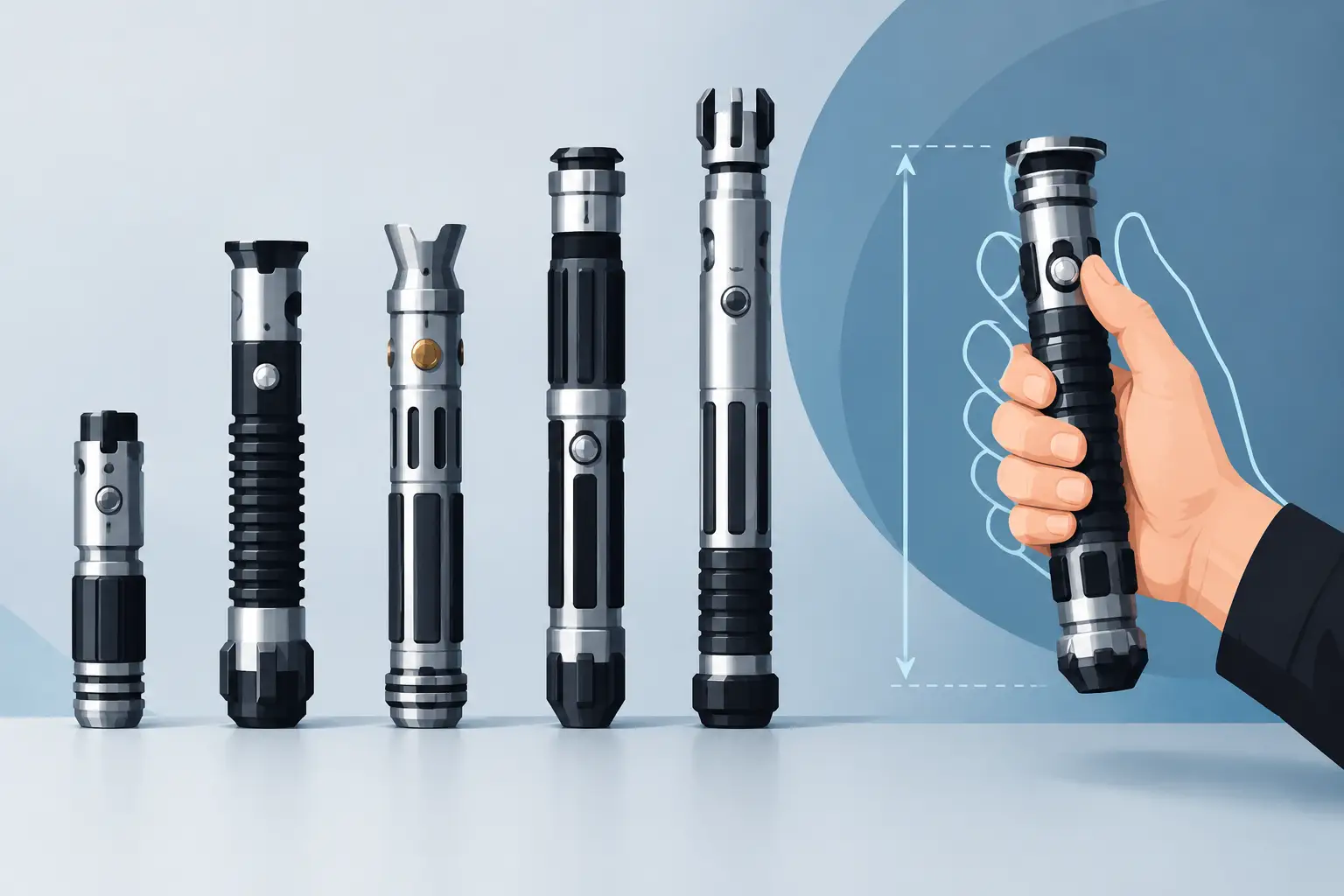
A saber can have the perfect blade color, sound font, and Jedi or Sith attitude, then still feel wrong the moment it lands in your hand. That is why a lightsaber hilt size guide matters. Hilt length, grip diameter, control placement, and even decorative details affect whether your saber feels like a natural extension of your arm or a prop you keep readjusting.
The best size is not always the longest, heaviest, or most screen-inspired option. It is the one that fits how you plan to use it. A display saber can prioritize detail. A dueling saber needs room for a secure grip. A Youngling or Padawan needs a handle they can control without fighting the hilt itself.
Start With Your Hands, Not Your Height
Your height can influence how a full saber looks in a cosplay photo, but hand size and intended use are much more useful when choosing a hilt. Measure the distance from the base of your palm to the tip of your middle finger, then pay attention to the width of your palm. You do not need laboratory precision. The goal is to understand whether you generally prefer a compact grip, a standard grip, or more room for two hands.
Also consider how you naturally hold a saber. Some fans keep both hands close together for fast directional changes. Others like to spread their hands farther apart for leverage during controlled sparring. Neither approach is wrong, but both need enough usable grip space.
A key detail: total hilt length is not the same as usable grip length. An emitter, pommel, switch box, covertec wheel, control section, or deep grooves may take up several inches. When comparing hilts, look at the smooth or comfortably textured area where your hands will actually sit.
The three measurements that matter most
For most buyers, hilt length is the first number to check. A compact hilt around 9 to 10 inches can feel quick and easy to carry, especially for one-handed poses, cosplay, and smaller hands. Standard hilts around 10.5 to 12 inches give most teens and adults a comfortable all-purpose balance. Longer hilts of 12 to 13.5 inches or more usually offer extra two-handed space and a more substantial presence.
Grip diameter matters just as much. Many combat-friendly sabers use a diameter around 1.25 to 1.5 inches. Near the smaller end, the hilt feels agile and easier to wrap your hand around. Near the larger end, it can feel powerful and stable, although users with smaller hands may find it tiring over a longer session.
Finally, check the location of buttons and protrusions. A hilt can have a great overall length yet feel awkward if your lower hand constantly bumps the activation switch or if your upper hand lands on a sharp decorative section.
Lightsaber Hilt Size Guide by Saber Use
For collecting and display
Collectors often have the most flexibility. If your saber will spend most of its time on a stand, screen-inspired proportions, layered greeblies, and a detailed control box can matter more than grip comfort. Character-inspired hilts may be narrow in one area, wide in another, or designed around visual accuracy rather than extended handling.
That does not mean display sabers cannot be held or posed with. It simply means you should expect more trade-offs. If you want one saber that looks exceptional on a shelf and still feels comfortable for occasional photos, a standard-length hilt with moderate detailing is usually the safest middle ground.
For cosplay and conventions
Cosplay calls for a hilt that is comfortable while walking, posing, and drawing for photos. A compact or standard hilt is often easier to carry on a belt and less likely to catch on robes, armor, or costume pieces. If you will wear gloves, account for the extra thickness. A grip that feels perfect barehanded may feel cramped once gloves are on.
For many adult cosplayers, 10 to 12 inches offers a strong blend of presence and comfort. A simple cylindrical grip also tends to be friendlier for long event days than a highly sculpted hilt with sharp fins or oversized switch sections.
For dueling and training
Dueling changes the equation. You need a hilt that lets you maintain control through repeated swings, blocks, and transitions. Most adults will appreciate a standard to slightly longer hilt with enough clear space for two hands, especially if they use wider blade motions or practice forms.
Look for a diameter you can close your hand around without squeezing hard. If your knuckles feel strained after a few minutes, the grip may be too large. If the saber rotates too easily inside your hand, a slightly thicker diameter, a better texture, or a longer grip section may help.
A longer hilt can improve leverage, but more length is not automatically better. Excess length can interfere with close-in movements, catch against your forearm, or make quick hand transitions less natural. For recreational full-contact-style dueling, a balanced, durable hilt with a clean grip area usually beats an ornate hilt chosen only for appearance.
For Younglings and Padawans
Younger fans need control more than maximum realism. A shorter, lighter hilt is easier to hold safely and less intimidating to maneuver. Youngling and Padawan-friendly sabers should allow a child to grip the handle without stretching their fingers or resting their hands directly on switches and emitter details.
Parents should also think ahead about the blade setup. A smaller child may be more comfortable with a shorter blade paired with a compact hilt, while an older Padawan may grow into a standard hilt quickly. The right choice depends on age, coordination, and whether the saber is mainly for supervised play, costuming, or beginner practice.
Diameter Can Make or Break the Fit
Two hilts with the same length can feel completely different because of diameter. This is especially noticeable with Sith-inspired builds, which may use thicker sections, aggressive claws, or heavier-looking emitters, and with certain Jedi designs that use slimmer, more refined necks.
If you have smaller hands, a slim or medium diameter often gives you better blade alignment and faster control. If you have larger hands, a very slim hilt may feel less secure, particularly during two-handed use. Still, avoid choosing by hand size alone. Texture changes the experience. Light knurling, subtle grooves, leather-style wraps, or ribbed grip sections can help a smooth hilt stay secure without forcing you into an oversized diameter.
For a quick fit check, hold a similar-sized cylindrical object if you have one available. Your fingers should wrap around it naturally without your fingertips digging sharply into your palm. You should be able to loosen and reposition your grip without feeling like the hilt will slide away.
Choose Style Without Sacrificing Comfort
Jedi, Grey Jedi, and Sith styles each bring their own visual language, but your preferred faction does not have to dictate an uncomfortable handle. A clean Jedi hilt may be ideal for fluid, practical movement. A Grey Jedi build often hits a useful balance between a refined profile and a more rugged, adaptable grip. Sith hilts can deliver the intimidating silhouette many fans want, though elaborate shrouds and angular details deserve a closer comfort check before you commit.
If you are torn between a character-inspired saber and a simpler combat saber, be honest about your main goal. Buy the character piece when visual authenticity is the priority. Choose the cleaner combat-focused build when you expect to train, duel, or use the saber for extended periods. There is no wrong path, and many fans eventually keep one saber for display and another for action.
Do Not Forget Blade and Accessory Compatibility
Hilt size also affects the rest of your setup. Most sabers are designed around common blade diameters, but blade retention systems, emitter depth, and connector options can vary. A wider emitter may look dramatic while adding front-end weight. A deeper blade socket can provide a more secure feel, but the full configuration may be heavier than a slim display-oriented build.
If you plan to add a coupler for a staff configuration, pay attention to the pommel shape and total combined length. Two compact hilts can make a manageable staff. Two long, heavy hilts can become tiring surprisingly fast. The same goes for upgrades such as soundboards, blade types, and grip accessories. Build around the experience you want, not just one measurement on a product page.
A Simple Way to Choose With Confidence
Before choosing your hilt, picture the first hour you will spend with it. Will you unbox it for a shelf display, wear it through a convention, hand it to a Youngling, or bring it to a weekend duel? That answer should guide your size choice more than any single rule.
At SaberBros, each saber is personally inspected before shipment, which helps take some uncertainty out of choosing gear online. Still, the smartest purchase is the one that matches your hand, your style, and your mission. Pick the hilt you will want to reach for again after the first ignition.