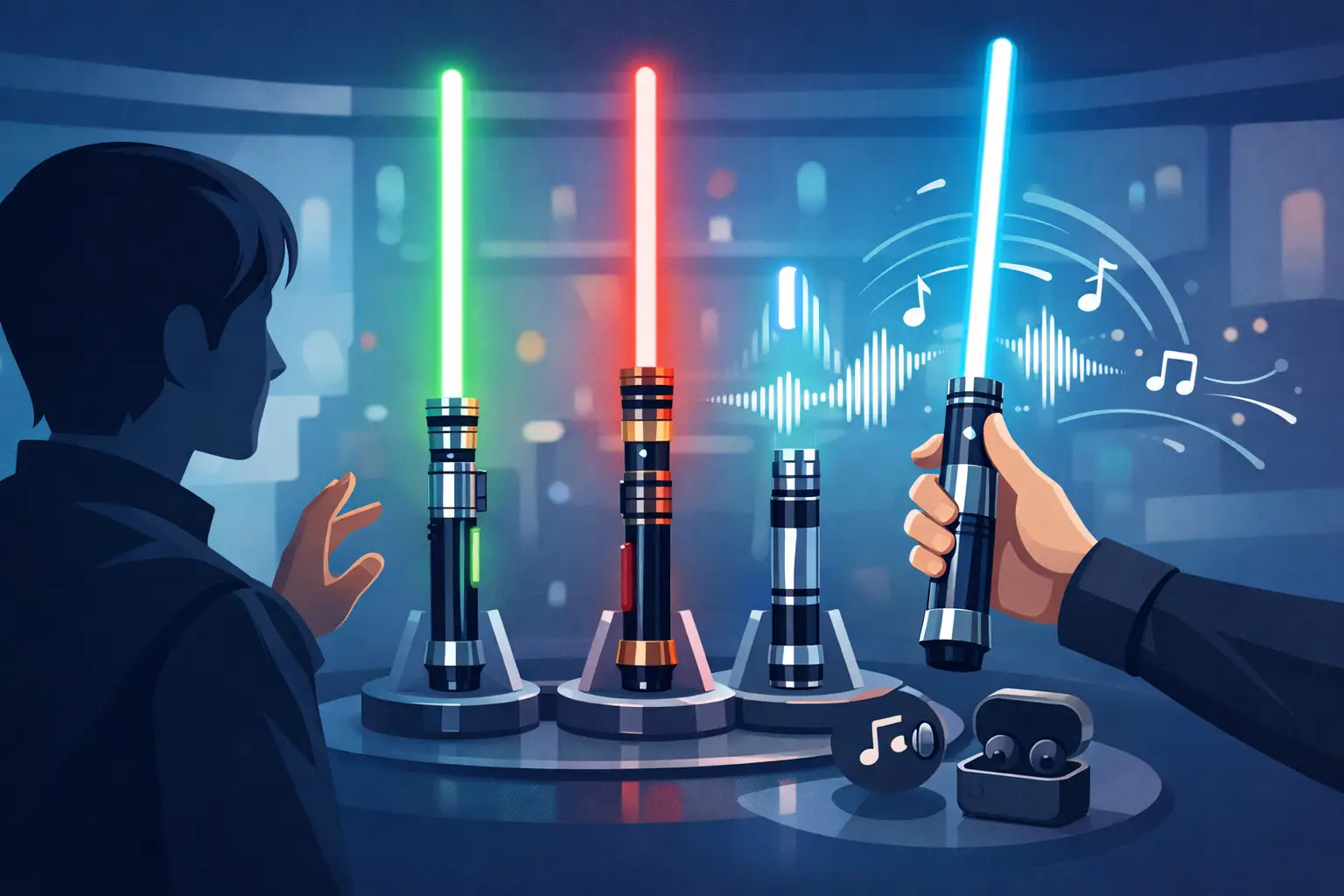
A costume can look screen-ready from ten feet away and still lose its magic the moment the prop in your hand makes a tinny beep, rattles during a pose, or goes silent halfway through a convention. The right lightsaber for cosplay with sound does more than add a glowing blade. It gives your character presence - in photos, on the convention floor, and during those moments when someone asks for a quick battle stance.
For cosplay, the best saber is rarely the one with the longest feature list. It is the one that fits your character, feels good in your hand, produces effects that match the mood, and holds up to a full day of travel, posing, and fan interaction.
What Makes a Sound Lightsaber Work for Cosplay?
Sound is what turns a lit prop into a saber that feels alive. A quality soundboard responds to movement with swing effects, plays ignition and retraction sounds cleanly, and provides impact sounds when the blade makes contact. That responsiveness matters more than people expect. A saber that reacts a beat late can feel disconnected on camera, while a properly tuned motion response makes even a simple pose feel cinematic.
Not every cosplay needs the same level of sound performance. A Youngling attending a local costume event may be happiest with clear ignition sounds, bright blade color, and straightforward controls. An adult Sith cosplayer staging dramatic videos may want deeper sound fonts, flash-on-clash effects, gesture controls, and a more aggressive hilt profile. The right choice depends on how you plan to use it.
Volume is another practical consideration. Loud sound can be fun outdoors, at a photoshoot, or during a performance. On a packed convention floor, however, maximum volume may be more distracting than impressive. Look for adjustable volume so you can keep the experience immersive without competing with every other blaster, droid, and saber in the room.
Match the Hilt to the Character, Not Just the Blade Color
Blade color gets attention first, but the hilt is the part people will see up close. It should support the identity you are building. Jedi-inspired hilts often suit clean, balanced costumes and a heroic stance. Sith sabers tend toward darker finishes, sharper lines, claw details, or more intimidating proportions. Grey Jedi builds can bridge both worlds with weathered metal, practical grips, and a design that feels personal rather than ceremonial.
If you are creating a character-inspired look, study the silhouette before chasing tiny details. Does the hilt look slim and elegant, heavy and industrial, or built for two hands? Does it have a prominent emitter, a wrapped grip, or a control box that will be visible in photos? A hilt that matches the visual language of your costume usually reads better than a random saber with the correct color blade.
Comfort deserves equal attention. You may carry your saber for six or eight hours, pose with it repeatedly, and clip it to a belt between photos. A handle that looks perfect but feels awkward can become a problem fast. Check the grip diameter, overall hilt length, switch placement, and whether any protruding details catch on gloves, robes, or costume pieces.
Choose Features Based on How You Will Use It
A cosplay saber does not need to be built exactly like a full-contact dueling saber. If your main goal is photos, appearances, and light choreography, visual accuracy and sound quality may matter more than a heavy blade. If you also want to spar with friends, durability moves higher on the list.
The most useful features for a cosplay-focused setup are usually a bright LED blade, responsive swing sound, impact effects, multiple blade colors or sound fonts, adjustable volume, and an easy recharge method. These are the features you will actually notice while wearing the costume.
More advanced electronics can be worth it for dedicated creators. Smooth swing technology produces more natural pitch changes as you move the saber, which is especially effective in video. Flash-on-clash creates a burst of light when blades connect, adding visual drama to staged duels. Some soundboards also allow deeper customization for fans who want a specific ignition style, hum, or combat sound.
There is a trade-off. More settings create more options, but they can also create a learning curve. If this is your first saber, a reliable model with intuitive controls may serve you better than a highly configurable build you never fully set up. A Padawan does not need a dozen menus to look convincing in a cloak.
Blade Length and Brightness Matter More Than You Think
For many adult cosplayers, a full-length blade creates the classic proportions people expect in photos. Yet a shorter blade can be the smarter choice for crowded convention halls, younger fans, or costumes with limited mobility. It is easier to carry, less likely to bump displays or fellow attendees, and often more comfortable during long days.
Brightness matters most in the environments where you will actually wear the costume. Indoor convention lighting is forgiving, so most quality illuminated blades will look great. Daylight is less forgiving. A blade that looks brilliant in a dark room can appear muted outdoors at noon. If you plan on daytime photo sessions, prioritize a bright blade and choose your location or shooting time with care.
A removable blade gives you flexibility. You can travel with the hilt packed separately, display it without the blade, and change blade lengths when your needs change. For flying or long-distance travel, always review event, airline, and venue rules before packing any prop. A powered-down saber is generally easier to manage than one left ready to ignite in a bag.
Plan for Convention Reality
Cosplay is not just a photoshoot. It is lines, parking lots, elevators, crowded aisles, weather, costume repairs, and the occasional person asking if they can hold your saber. A little preparation protects both your prop and your day.
Before an event, fully charge the battery and test the ignition, volume, and blade connection. Learn how to switch the saber off quickly. If your model uses a removable battery, bring the appropriate backup only if venue rules allow it and you can carry it safely. A blade plug can also be useful when displaying or transporting the hilt without a blade installed.
Treat the blade as a prop around crowds, even if your saber is rated for dueling. Keep wide swings for designated photo areas or choreographed spaces. Never strike walls, tables, or another person's costume, and get permission before making blade contact in photos. A controlled pose looks better than a reckless swing anyway.
For belt carry, make sure your retention system is secure before entering the venue. Test it while walking, sitting, and turning. The last thing any Jedi or Sith wants is a hilt rolling across a convention floor because a clip was chosen for appearance alone.
Why Inspection and Support Belong in the Decision
A sound saber has electronics, wiring, a speaker, a battery system, and moving or removable components. That is why buying from a retailer that treats inspection and support seriously matters. You are not only choosing a hilt design. You are choosing who will help if a blade connection needs troubleshooting or a setting does not behave as expected.
At SaberBros, the focus is on pairing enthusiast-grade sabers with real human service, including personal pre-shipment inspection, free U.S. shipping, and warranty protection. That kind of ownership support is particularly valuable for a first-time buyer who wants to spend convention day in costume, not searching for answers to a technical issue.
Read the warranty and return terms before you buy, then keep your order information and charging instructions somewhere easy to find. Most common problems are simple: a battery that needs charging, a blade that needs to be seated more firmly, or a control sequence that needs a second look. Clear support turns those moments into a quick fix instead of a ruined event.
A Quick Pre-Event Saber Check
The night before a cosplay event, run through five essentials: charge the saber fully, confirm the blade is secure, test sound at a comfortable volume, inspect your belt attachment, and pack the charging cable or appropriate battery backup. It takes a few minutes and prevents most avoidable issues.
Then give yourself a little time to practice. Find the ignition control without looking, learn the motions that trigger swing sounds, and try a few simple poses in your costume. You do not need stage-combat training to look the part. A steady stance, a confident grip, and a saber that responds at the right moment will carry the scene.
Pick the saber that supports the character you want to become, then use it with enough care that it is ready for the next photo, the next convention, and the next call to join the fight.