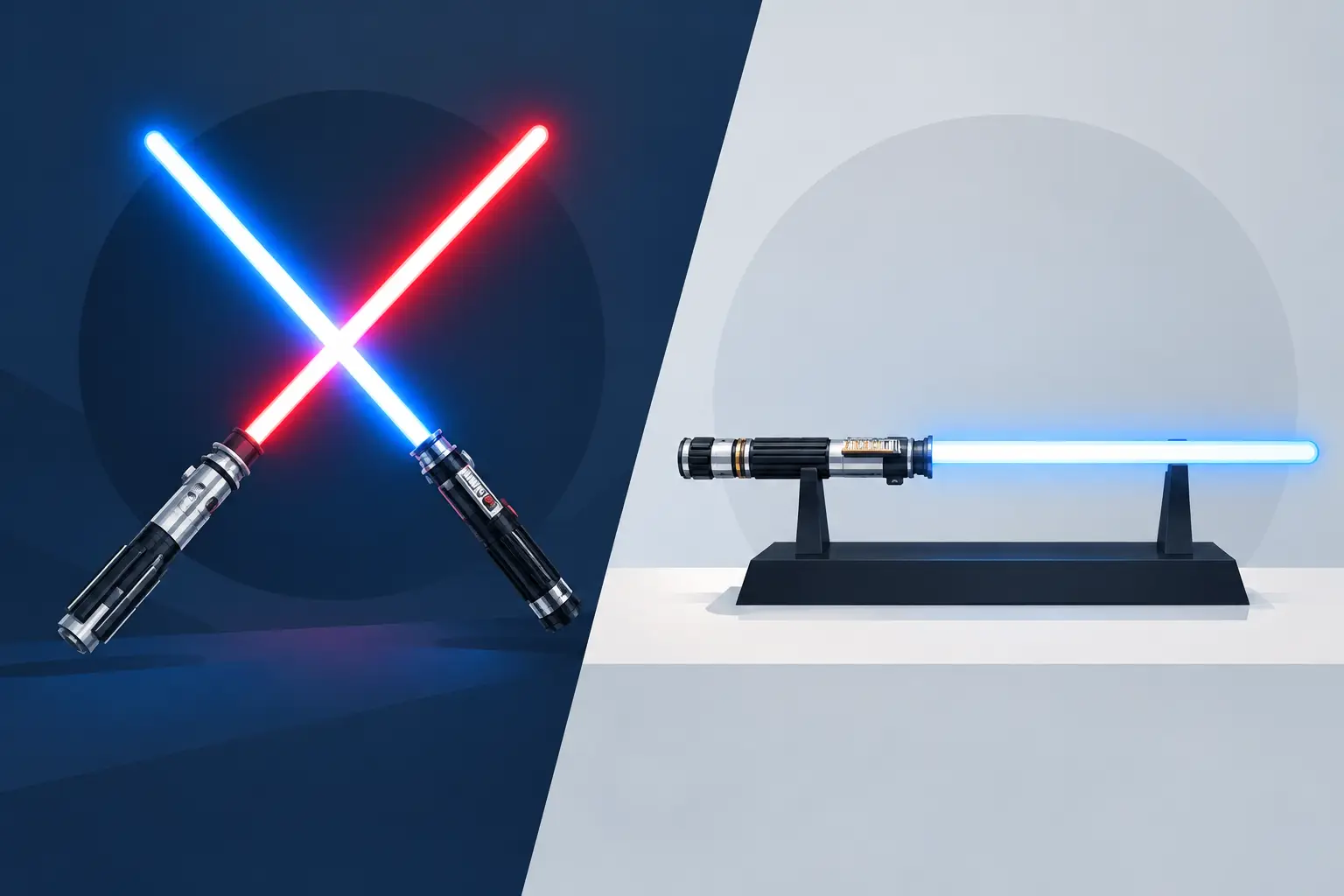
A beautiful hilt can look perfect on a shelf and still be the wrong choice for a sparring session. That is the real decision behind dueling sabers versus display replicas: not which one is better overall, but which one is built for your version of the galaxy. A Sith looking for hard-hitting backyard battles, a Jedi planning a convention costume, and a collector recreating an iconic character prop may all need very different sabers.
The good news is that you do not have to choose based on appearance alone. Once you understand how each category handles impact, weight, blade mounting, electronics, and screen accuracy, the right path becomes much clearer.
What Makes a Dueling Saber Different?
A dueling saber is designed with movement and contact in mind. Its job is to survive repeated swings, controlled strikes, blocks, and the occasional enthusiastic clash that happens when a friendly duel gets competitive. The hilt is commonly built from aluminum, with a durable polycarbonate blade secured by retention screws. That combination matters far more than a flashy finish when sabers are actually going to meet.
The blade is usually the first point of consideration. A combat-ready polycarbonate blade has enough wall strength to absorb ordinary recreational impacts without cracking as easily as a thin decorative blade. A properly seated blade and solid retention system also help prevent wobble, which can make a saber feel unreliable and put unnecessary stress on the hilt during use.
Dueling-focused hilts also tend to favor practical geometry. Smooth gripping areas, manageable emitter shapes, and balanced overall weight make long practice sessions more comfortable. A deeply sculpted, screen-accurate control box may look fantastic, but it can dig into your hand or catch against a glove while spinning the saber.
That does not mean every dueling saber has to look plain. Jedi, Grey Jedi, Sith, and character-inspired styles can all carry plenty of personality. The difference is that a combat build puts durability and handling ahead of tiny visual details that could bend, loosen, or interfere with your grip.
The electronics still need sensible treatment
A duel-ready hilt can include bright blade effects, sound, motion response, and multiple ignition styles. Still, electronics are not invincible simply because the outer hilt is metal. Hard impacts, drops on concrete, moisture, and striking the hilt against another saber can damage components over time.
For that reason, recreational dueling should mean controlled contact rather than full-force swings with no regard for the equipment or the person across from you. Eye protection, open space, and a clear agreement about intensity make every duel better. Even a strong saber lasts longer when it is treated like a piece of gear instead of a baseball bat.
What Defines a Display Replica?
A display replica is made to capture a specific look. It may recreate an iconic emitter, a distinctive pommel, a shaped grip, weathered finishes, decorative switches, or other features that make a character-inspired hilt instantly recognizable. For collectors, that visual accuracy is the point.
The trade-off is that a display-first design can include parts that are less comfortable or less suitable for repeated impacts. Thin necks, ornate emitters, exposed control boxes, activation switches, and intricate finishes may be faithful to the source material, yet vulnerable in a duel. A replica can be made from quality metal and still not be intended for blade-on-blade contact.
Display replicas shine in places where detail gets the attention it deserves: a collection wall, a desk stand, a costume photo shoot, a themed room, or a convention where you want your hilt to feel like it stepped out of a favorite scene. Many are also excellent for light choreography, posing, and carrying as part of cosplay. The key is distinguishing light use from impact use.
Screen accuracy can change how a hilt feels
A replica may have a narrow neck, longer handle, asymmetrical grips, or projections that affect balance. Those details create character, but they can change the way the saber turns in your hand. Some collectors love that distinctive feel because it makes the prop experience more authentic. A duelist may find the same design awkward after ten minutes of drills.
Finish is another consideration. Weathering, polished metal, painted accents, and fine decorative elements can make a replica feel special, but they deserve more careful handling. If you want a hilt that always looks display-ready, storing it safely and avoiding hard contact is part of the ownership experience.
Dueling Sabers Versus Display Replicas: The Real Trade-Offs
The most useful comparison is not strength versus weakness. It is purpose versus compromise. A dueling saber asks, “Can you use this repeatedly?” A display replica asks, “Does this look and feel true to the design that inspired it?” Some sabers sit in the middle, but no single model can maximize every quality at once.
For regular sparring, durability should lead your decision. Look for a sturdy aluminum hilt, a properly retained polycarbonate blade, comfortable grip space, and an emitter design that does not create an obvious weak point. If you are buying for a Youngling, Padawan, or first-time duelist, a straightforward, balanced design is often more enjoyable than a highly ornate hilt that needs constant caution.
For collecting, prioritize the details you will notice every time you see the saber. That could be the silhouette, grip pattern, control layout, finish, or resemblance to a favorite Jedi or Sith style. A display replica is not a lesser saber because it is not built for hard contact. It is simply made for a different kind of excitement.
For cosplay, either option can work. If your event involves photos, walking convention floors, and posing with friends, a display-focused hilt may give your costume the visual edge you want. If you expect staged fights, spinning, or repeated choreography, a more durable combat-oriented model can bring welcome peace of mind. You can still choose a hilt with a strong identity without selecting one that is too delicate for your plans.
How to Choose Without Regretting It
Start by being honest about what your saber will do most often. If you picture weekly duels in the garage, backyard, or training space, buy for impact resistance first. If you picture it mounted next to helmets, figures, or a favorite poster, visual fidelity should carry more weight. If it is a gift, think about the recipient's age, experience, and whether they are likely to swing it the minute it comes out of the box.
It also helps to think one year ahead. A first saber often becomes a gateway to a larger collection. Many fans eventually own one reliable combat saber for practice and one detailed hilt they keep ready for display or special cosplay. That approach removes the pressure to force one purchase into every possible role.
Before ordering, check the product description for clear language about intended use, blade compatibility, and included features. If a saber is marketed for dueling, that should be stated directly rather than assumed because the hilt looks metal. If you are unsure, ask. Real customer support is especially valuable when you are choosing between a screen-inspired design and a saber that needs to handle active use.
SaberBros personally inspects sabers before shipment and backs purchases with warranty protection, which gives first-time buyers and experienced fans more confidence when choosing the right build. A little guidance before the order can prevent the disappointment of discovering that your new favorite hilt does not match the way you planned to use it.
The Best Saber Is the One You Will Actually Enjoy
Choose a dueling saber when you want to train, spar, spin, and hear that satisfying clash without worrying over every controlled hit. Choose a display replica when the hilt's details, finish, and character-inspired silhouette are what make ownership meaningful. And if you love both experiences, there is nothing wrong with building a collection that gives your battle-ready saber a partner on the display stand.