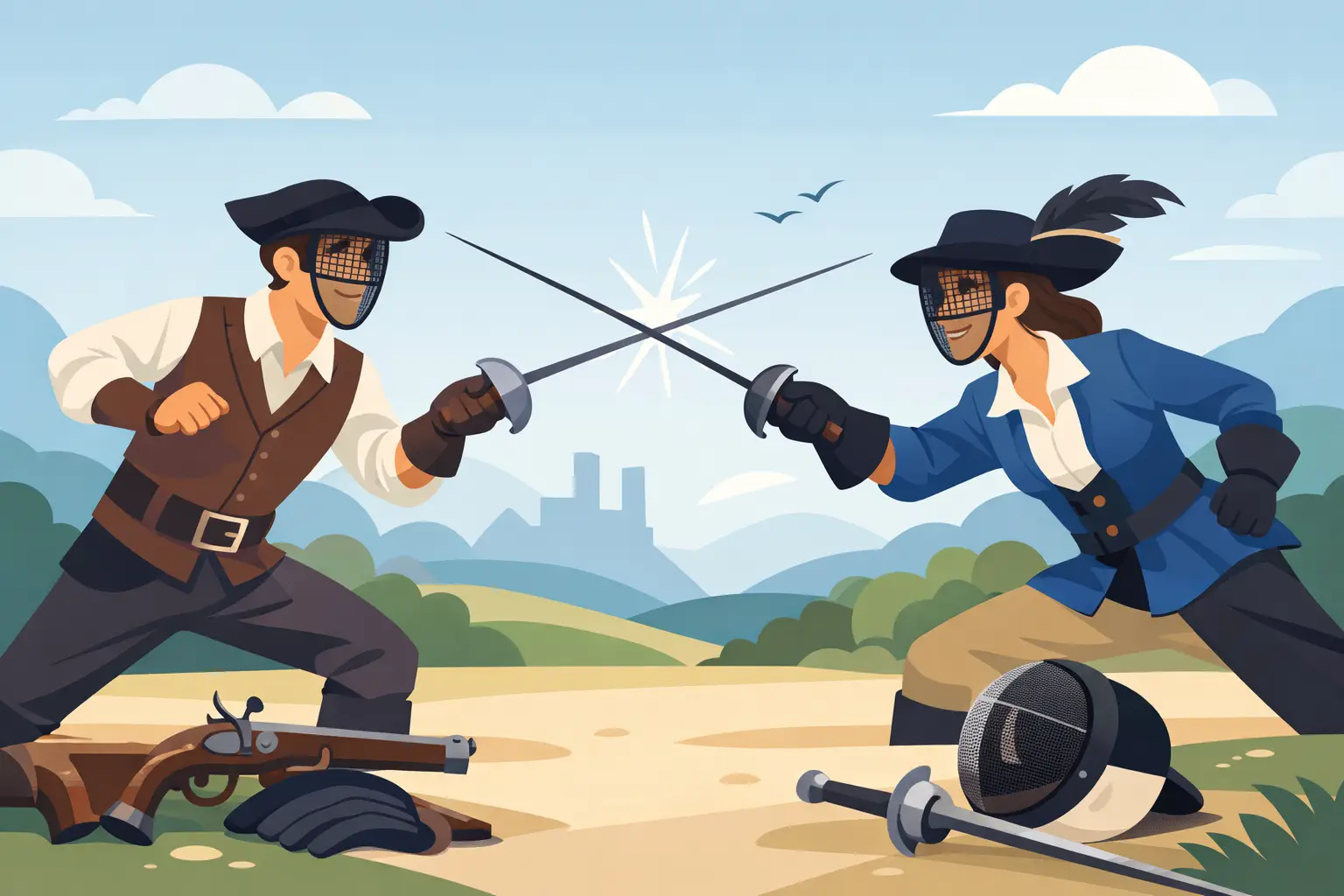
A lightsaber duel should feel like the moment two blades ignite, not like an unexpected trip to urgent care. The best dueling rules for beginners are simple: protect each other, control every strike, and agree on the game before the first clash. Whether you are a Padawan practicing with a friend or a parent setting up a backyard battle, good rules turn a cool saber into a safe, repeatable hobby.
Start With the Right Kind of Saber
Not every lightsaber is built for contact. A display saber may look incredible on a shelf or complete a cosplay, but its blade, emitter, or internal components may not be intended to absorb repeated impacts. Before anyone duels, confirm that both sabers are rated for the level of contact you plan to use.
For beginners, a durable combat-ready saber with a sturdy blade is usually the smart choice. You do not need to swing as hard as possible to make a duel feel exciting. In fact, a saber that handles controlled contact well is more useful than an elaborate hilt that encourages you to treat every exchange like a final showdown.
Match the equipment as closely as you can. A heavy, high-powered swing against a lighter saber or a thin cosplay blade creates an uneven situation. If two friends have different builds, set the pace around the less durable setup or skip blade contact altogether and practice choreographed movement.
Dueling Rules for Beginners: Agree Before You Ignite
Most beginner problems happen because two people assume they are playing the same game. One person wants a light, cinematic duel. The other starts throwing full-speed strikes. A quick pre-duel agreement prevents that mismatch.
Decide what counts as a valid strike, how much contact is allowed, where strikes are prohibited, and what happens after someone scores. For casual sparring, a clean touch to an approved target area can end the round. For choreography, you may not be keeping score at all. You are simply working through a sequence safely.
Use a clear stop command. “Hold” works well because it is short and easy to hear. The moment either duelist calls it, both blades stop moving. No finishing strike, no argument about whether the call came too late. That rule matters more than any point system.
It also helps to choose a round length. Thirty seconds to one minute is plenty for new duelists. Short rounds reduce fatigue, and fatigue is when grip, footwork, and judgment start to slip.
Set Safe Target Zones
A saber is not a toy sword when it is moving at speed. The safest beginner approach is to create a small set of approved target zones and treat everything else as off limits.
Generally, keep strikes away from the head, face, neck, throat, hands, groin, knees, and feet. Head strikes should be prohibited, even if both duelists are wearing helmets. They are hard to control, easy to misjudge, and simply not necessary for a good match.
For light recreational sparring, the torso and upper arms are usually the easiest areas to call cleanly. Some groups include thighs, while others avoid leg strikes because they can be difficult to pull safely. There is no universal answer. The right rule depends on the ages of the duelists, the gear being used, the available space, and the level of experience.
Keep the target rules uncomplicated. If a beginner must remember twelve exceptions while reacting to a moving blade, they will probably forget them. Simple rules create cleaner action.
Treat Hands as a Protected Area
Hand strikes are common in fictional duels, but they are a poor choice for beginner sparring. Hands naturally drift toward the hilt and are exposed during blocks. A hard hit on knuckles can end the fun immediately.
If a blade touches a hand during a light exchange, pause and reset rather than arguing over a point. As skills improve and protective gear enters the picture, an experienced group may set different standards. Beginners do better when hand contact is a clear no-go.
Control Beats Power Every Time
The core skill of safe dueling is calibration: the ability to make contact without driving through your partner. Think of the blade as making a clear tap, not chopping wood.
Begin at about 25 percent speed and power. That may feel slow for the first minute, especially if you grew up watching fast screen duels. Stay there anyway. Controlled practice reveals whether you can stop a strike, redirect a swing, and recover your balance. Those abilities make later speed look better and feel safer.
Avoid wide, baseball-bat swings. They take longer to stop, are harder to aim, and can carry past the intended target. Compact cuts from a stable stance give you more control. Keep both hands on the hilt unless you are intentionally practicing a choreographed move that has been discussed beforehand.
A good test is this: could you stop your saber before it reaches your partner if they suddenly froze? If the answer is no, slow down. That is not a failure. It is training.
Wear Gear That Matches the Session
For very light, controlled blade contact, eye protection is a smart baseline. As intensity increases, add more protection rather than assuming confidence is protective gear. Gloves can help with accidental hilt or blade contact, while forearm guards, chest protection, and fencing-style masks may make sense for more active sparring.
Gear does not make unsafe behavior acceptable. A helmet is not permission to aim for the head, and padded gloves are not permission to hit hands. Protective equipment is there for accidents and added confidence, not to erase the rules.
Parents supervising Younglings should keep sessions especially light and structured. Use shorter blades when appropriate, keep an adult nearby, and focus on movement games or simple target drills instead of competitive exchanges. A young duelist can learn stance, distance, and respect long before they need speed.
Check Your Space and Your Saber
Do a quick safety check before every session. Look at the blade for cracks, looseness, or damage. Make sure the retention screws are secure and the blade is seated correctly. Inspect the hilt for sharp edges, loose parts, or anything that could catch a hand during movement.
Your dueling area matters just as much. Choose an open space with stable footing, enough room to step backward, and no lamps, low ceilings, furniture corners, pets, or spectators within striking distance. Outdoors can work well, but watch for uneven ground, wet grass, and poor visibility.
Leave a safety buffer around the duelists. If your blades or bodies can reach a wall, window, or bystander with one missed step, the space is too tight. Move to a larger area or switch to footwork and choreography without blade contact.
Learn Three Skills Before Fancy Moves
Beginners do not need spinning attacks, behind-the-back flourishes, or dramatic leaps. Those moves look impressive only when the duelist has the fundamentals to control them. Start with stance, distance, and recovery.
A balanced stance keeps your feet under you and your knees slightly bent. Do not lock your legs or lean far forward. Keep enough space between your feet that a gentle push would not send you stumbling.
Distance means recognizing when you can strike and when you cannot. Practice moving in, making one controlled touch to an approved zone, then moving back out. This single drill teaches range better than wild trading of blows.
Recovery is what you do after a missed strike or block. Bring the blade back to a ready position before attacking again. Do not chase a miss with a frantic second swing. Resetting may feel less dramatic, but it is where clean technique begins.
Keep Scoring Simple and Respectful
For first-time recreational duels, one clean strike to an approved zone can win the round. If both people strike at nearly the same time, call it a double hit and reset. If nobody is sure what happened, do not turn it into a debate. Reset again.
The goal is not to prove that one person has perfect reflexes. It is to build trust. A good dueling partner acknowledges a clean hit, apologizes for accidental contact, and adjusts their power when asked. That attitude makes people want to practice with you again.
SaberBros customers often choose combat-ready builds because they want something they can enjoy beyond the display stand. The long-term fun comes from treating that gear with care and treating your dueling partner even better.
Know When to Stop
End the session when control drops. Heavy breathing, sore hands, frustration, loose gear, a damaged blade, or repeated accidental contact are all good reasons to call a break. There is no prize for pushing through a situation that is getting sloppy.
After the duel, power down, inspect the sabers, and talk for a minute. Was the pace right? Did any target rule feel unclear? Did someone need more room or lighter contact? Those small adjustments are how a pair of beginners becomes a reliable training team.
The Force may be fictional, but respect, restraint, and good judgment are real skills. Bring those to every match, and your next duel will be safer, sharper, and far more fun to remember.