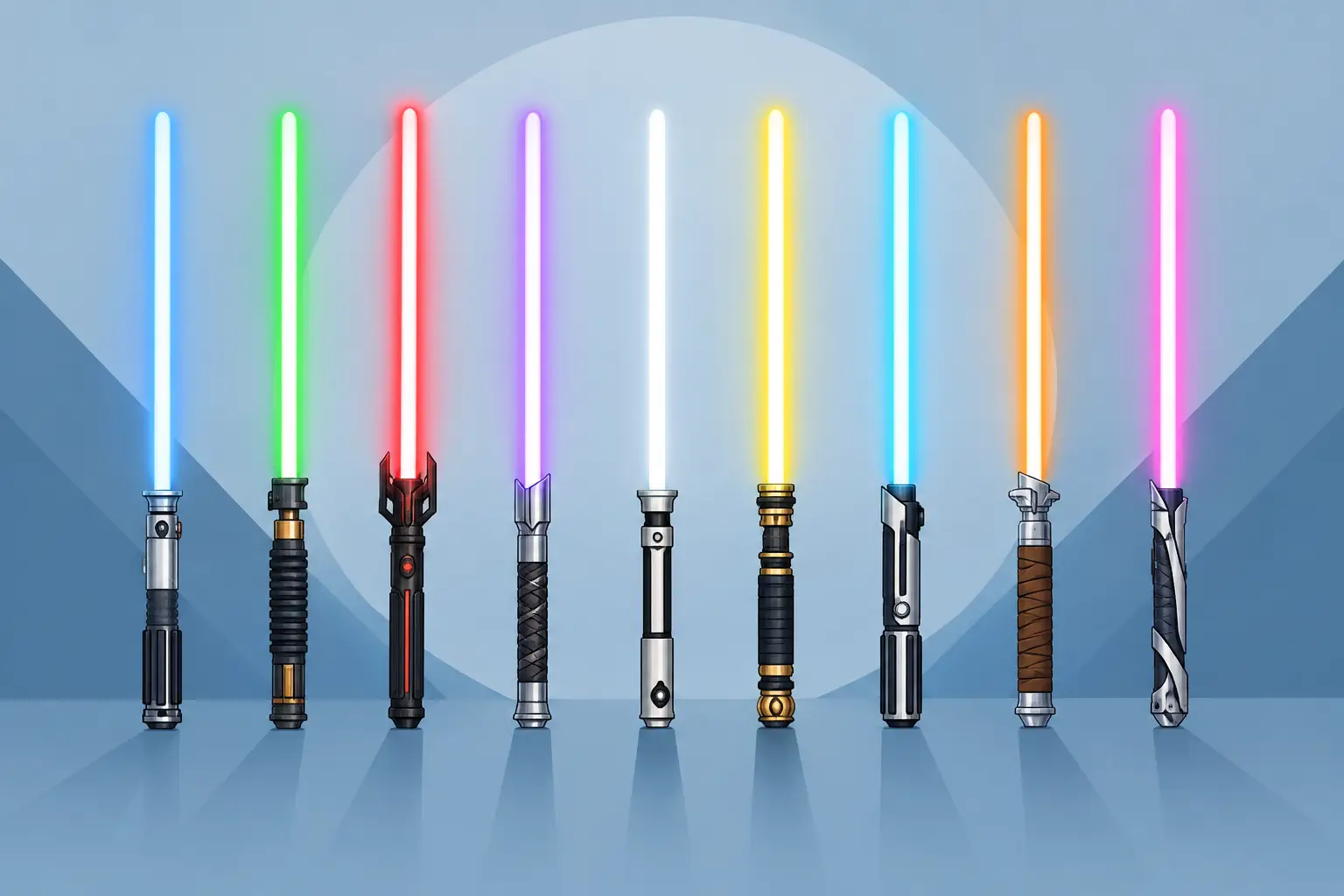
A cosplay saber is more than a glowing prop at your hip. It sets the character’s silhouette, suggests their fighting style, and often becomes the detail people remember in photos. These cosplay saber examples can help you match a hilt and blade style to your costume, whether you are building a first convention outfit, a screen-inspired character look, or an original hero or villain.
The best choice is not always the most elaborate saber. A long, ornate hilt can look incredible in a display photo but feel awkward after several hours on a convention floor. Start with the character identity you want to project, then consider grip comfort, blade color, sound, and how you plan to carry it between photos.
Cosplay Saber Examples by Character Style
1. The classic blue-blade Jedi
A clean silver hilt with black grip sections and a blue blade is the most recognizable Jedi cosplay option. It works especially well for a traditional guardian, knight, or mentor costume with neutral robes, boots, and a belt-mounted clip.
This is a strong first-saber direction because it reads clearly from across a room. Choose a hilt with enough texture to keep your hand from sliding during poses, but avoid oversized control boxes if you expect to wear it all day. Blue also photographs well under most convention lighting, although bright sunlight can reduce the visible glow of any blade.
2. The green-blade Jedi diplomat
Green gives a costume a slightly more thoughtful, classic Jedi presence. Pair it with a slimmer hilt, a simple emitter, and layered robes in tan, cream, brown, or muted gray. This is a great example for fans who want an elegant look rather than a battle-worn warrior build.
A narrower hilt is often more comfortable for smaller hands and easier to hang from a belt. If your costume includes gloves, test how easily you can find the activation switch before the event. Small controls can look authentic but may be harder to operate through fabric.
3. The weathered survivor saber
A worn hilt with scuffs, darkened details, and a practical grip tells a story before you say a word. This style fits a Jedi survivor, rebel fighter, scavenger, or original character who has spent years traveling difficult worlds.
Weathering should look intentional. A few darker marks around the emitter, pommel, and edges where hands would naturally rub create more believable wear than covering every surface with paint. If you are buying a finished saber, look for a design that already has layered finishes and mechanical detail rather than trying to force every polished hilt into a distressed character concept.
4. The red Sith statement piece
For instant presence, a red blade and aggressive hilt profile are hard to beat. Sith-inspired sabers often use black, silver, red, or gold accents, along with claw-like emitters, angular shrouds, or a heavier grip. They are ideal for villain costumes, dark-side original characters, and dramatic photo shoots.
There is a trade-off: highly sculpted hilts can catch on robes, capes, or gloves. They can also be less comfortable for extended one-handed posing. If you plan to duel casually as part of your cosplay, prioritize a secure grip and balanced feel over the sharpest-looking emitter design.
5. The double-bladed dark-side build
A staff-style saber immediately changes your silhouette. It suits an acrobatic fighter, temple guard-inspired look, dark-side warrior, or any character meant to command attention in a group photo. Two connected hilts can create a convincing double blade, while a coupler also gives you the option to separate them into two individual sabers.
Think about event rules before bringing one. A long assembled staff takes up more space in crowded aisles and may need to stay unlit or be carried carefully in certain venues. A connector-based setup is useful because you can travel with two compact hilts and assemble the full look for photos or approved costume gatherings.
6. The Grey Jedi balance
Grey Jedi cosplay leaves room for personal storytelling. A balanced hilt in silver and black, perhaps with bronze or weathered accents, can bridge the visual gap between polished Jedi gear and harsher Sith styling. Blade colors such as blue, green, purple, or even a custom color can support the character without making the costume feel locked to one familiar archetype.
This is often the right route for an original costume. Instead of copying every detail from a screen-used design, choose a saber that feels like it belongs to your character’s history. A practical grip might suggest a fighter. A clean emitter and restrained accents can suggest discipline. Small choices carry the concept.
7. The purple blade with a confident hilt
Purple is a natural choice for fans who want a recognizable Jedi-adjacent look with more personality. It pairs especially well with black-and-silver hilts, subtle gold accents, and costumes that include deeper browns, charcoal, or muted burgundy.
Because purple can look different in photos depending on camera settings, a saber with adjustable colors is useful for cosplay. You can tune the shade warmer or cooler to match your costume and venue lighting. Just keep the final color consistent during a shoot so the character feels visually intentional.
8. The non-Jedi wanderer
Not every Star Wars-inspired costume needs a traditional knight or villain silhouette. A traveler, bounty hunter ally, relic hunter, or Force-sensitive wanderer can carry a compact, unconventional saber. Consider a shorter hilt, a shrouded emitter, or a design that appears assembled from salvaged components.
This approach works well if you prefer a costume that feels personal rather than screen-exact. Keep the rest of the outfit grounded with a belt, pouch, gloves, and boots that make sense for someone who actually carries the weapon. The saber should feel integrated into the character, not added at the last minute.
9. The young Padawan or family cosplay saber
For a young fan, comfort and durability matter more than intricate details. A straightforward Padawan-style saber with a manageable hilt, secure blade retention, and easy controls lets them participate in photos and supervised play without fighting the equipment.
Parents should consider the setting. A bright blade and sounds can be exciting at home, but conventions can be noisy and crowded. Make sure your youngling knows when the saber stays clipped, when it can be carried, and when it is appropriate to activate it. A costume is more fun when everyone can move safely through the event.
10. The screen-inspired collector costume
A character-inspired saber can pull together a costume that might otherwise feel incomplete. The key is deciding whether you need a close visual match for photos or a practical version you can comfortably wear and use. Exact-looking controls, emitters, and grips add authenticity, while a more ergonomic hilt may be better for a full day of cosplay.
There is no wrong answer. If your goal is a contest entry or detailed portrait session, visual accuracy may lead the decision. If you are attending a busy convention, choose the version that will not dig into your palm, snag on your costume, or become stressful to carry.
Choosing a Saber That Works Beyond the Photo
Before committing to one of these cosplay saber examples, think through the full event experience. Will the saber ride on your belt? Will you pose with it for hours? Are you planning light choreography or recreational dueling? A display-focused hilt, a cosplay-ready hilt, and a combat-oriented saber can overlap, but they are not always the same product.
Blade length matters as much as hilt style. A longer blade creates a dramatic silhouette, but it requires more awareness in crowds and can be harder to transport. A shorter blade may suit younger users, tight convention spaces, or compact character designs. If your saber supports blade removal, carrying the hilt and blade separately can make travel much easier.
Sound and lighting features are worth considering, too. Smooth swing effects, ignition sounds, and multiple blade colors make a character feel alive during a video or staged photo. On the other hand, a simpler setup may be all you need if the saber will spend most of its time on a belt or display stand. Buy for the experience you will actually use, not just the feature list.
SaberBros helps take some of the uncertainty out of that decision with personally inspected sabers, warranty protection, free U.S. shipping, and real support when you need guidance on a hilt, blade, or upgrade. A saber should arrive ready to become part of your character, not another problem to solve before the event.
The right cosplay saber does not have to follow a single path. Pick the hilt that feels good in your hand, the blade color that supports your character, and the level of detail that makes you want to step into the costume again.