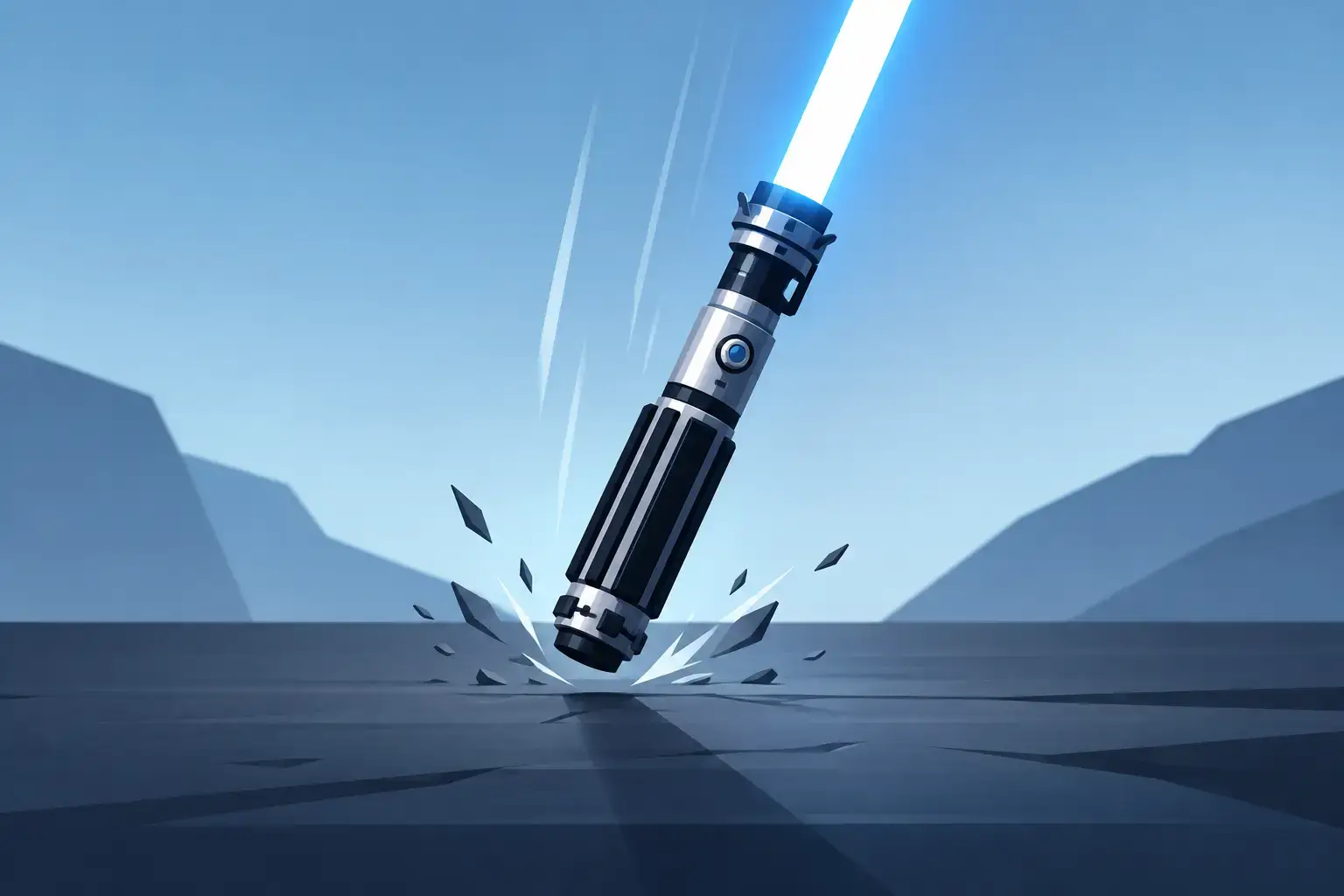
A lightsaber slipping from your hand at the end of a duel can make any Jedi, Sith, or worried parent freeze for a second. So, can lightsabers survive drops? Many quality sabers can handle an occasional fall, especially onto a forgiving surface, but no electronic saber is completely drop-proof. What happens next depends on the saber's construction, where it lands, how far it falls, and whether it has a blade installed.
For collectors, the good news is that a single accident does not automatically mean a ruined hilt. For duelists, the more useful answer is this: choose a saber built for your intended use, treat drops as avoidable accidents rather than a durability test, and know what to inspect before the next ignition.
Can Lightsabers Survive Drops Onto Hard Floors?
A lightsaber is more likely to survive a short drop onto carpet, grass, or a padded mat than onto concrete, tile, or hardwood. That sounds obvious, but the hard surface is only one part of the equation. A saber landing flat across the blade distributes force differently than one striking blade-tip first, emitter first, or directly on the pommel.
The hilt itself is usually the strongest part. Metal-hilt sabers are made to feel substantial in the hand, and a well-built aluminum hilt can tolerate everyday handling far better than a plastic toy saber. Still, a hard impact can dent an edge, scratch the finish, loosen a retention screw, or affect an internal connection.
The blade is often more exposed. A polycarbonate blade designed for combat use has much better odds than a thin display-oriented blade, but a direct tip strike can stress the blade, tip plug, or connection at the emitter. If the blade lands at an awkward angle, the leverage on the emitter can be greater than the drop height suggests.
A drop from waist height onto carpet may leave no sign at all. A drop from the same height onto concrete can leave cosmetic marks even when the saber still works perfectly. A fall down stairs, from a balcony, or out of a moving vehicle is a very different situation. Even a Sith would call that unnecessary punishment.
What Is Most Likely to Be Damaged?
Not every drop causes the same kind of damage. Cosmetics tend to be the first concern: finish wear, scuffs, chipped paint on certain designs, or dents around raised control boxes and emitters. These marks may not affect performance, but collectors may understandably care about them.
The next risk is mechanical. Blade retention screws can loosen, threaded sections can shift, and a coupler or pommel may need to be tightened. If a saber hits directly on its switch area, the button or switch housing may take the impact. Character-inspired hilts with detailed grips, shrouds, or protruding controls can be more vulnerable than a clean, cylindrical dueling hilt.
Electronics are the most unpredictable part. The battery, speaker, soundboard, wiring, and connectors are protected inside the hilt, but a sharp impact can occasionally dislodge a battery, loosen a connector, or create an intermittent issue. A saber that turns on after a drop is encouraging, but test the sound, blade color, motion effects, and charging function before assuming everything is fine.
Water is a separate concern. A dropped saber that lands in a puddle, snow, or wet grass needs more caution than one that lands on dry carpet. Turn it off, remove the battery if your model allows it, and let it dry fully before charging or operating it. Charging a wet electronic hilt is a far bigger risk than a normal scuff from a fall.
Combat Sabers Handle More Than Display Pieces
A combat-ready saber and a display saber may look equally impressive on a shelf, but they are built with different priorities. Combat sabers generally use sturdier blades, secure blade retention, and hilts intended to withstand controlled recreational dueling. That makes them a better choice for training, choreographed fights, and fans who know their saber will see active use.
That does not mean a combat saber should be dropped on purpose. Dueling force is usually applied along the length of the blade in a controlled way. A drop can concentrate force at one small point, particularly on the emitter, blade tip, switch, or pommel. Strong for dueling does not equal immune to impact damage.
For a Youngling or Padawan, a starter-friendly saber can be an excellent way to enjoy the experience with less concern over every tiny scratch. Parents should still encourage two-handed handling, a clear play space, and a simple rule: if the saber falls, stop and check it before swinging again.
For serious sparring, prioritize a configuration meant for combat rather than choosing only by hilt appearance. A balanced Grey Jedi-style hilt may feel better during practice than a heavily detailed collector design, while an aggressive Sith emitter may look incredible but demand extra awareness around furniture, floors, and nearby people.
How to Check a Lightsaber After a Fall
After an accidental drop, resist the urge to immediately start another duel. A quick inspection takes less than a minute and can prevent a small issue from becoming a larger one.
Start with the blade. Look for cracks, whitening near the tip, deep gouges, or a blade that now sits crooked in the emitter. Check that the retention screws are present and snug. Do not overtighten them, since that can damage the blade wall or threads.
Then inspect the hilt. Look over the emitter, switch, grip, pommel, and any decorative sections for new gaps, rattles, or loose parts. If the hilt has threaded sections, make sure they are hand-tight. Do not force pieces that seem cross-threaded or bent after impact.
Finally, power it on in a safe space. Listen for clear sound, confirm the blade illuminates evenly, and test normal motion response. If the saber flickers, shuts off unexpectedly, rattles internally, or will not charge, stop using it until you can identify the issue. Continuing to duel with a loose blade or damaged connection is rarely worth it.
Simple Habits That Prevent Most Drops
The best drop protection is not a tougher floor test. It is better handling. Keep your grip dry, make sure your hands are free of lotion or sweat before practice, and use enough open space to move without clipping a chair, ceiling fan, or doorway.
When carrying a saber, hold the hilt rather than the blade. Never lean it upright against a wall where it can slide onto a hard floor. For travel, remove the blade when practical and use a padded case, sleeve, or secure storage solution that keeps the hilt from rolling around with chargers and other accessories.
During dueling, use a wrist lanyard only if it is designed and fitted for safe use. A poorly fitted strap can create its own problem if the saber swings unpredictably after slipping free. Controlled footwork, a firm but relaxed grip, and a clear training area are the better foundation.
When a Drop Means It Is Time for Support
Minor scratches are part of an actively used saber's story. But visible blade cracks, bent components, loose electronics, charging trouble, or recurring flicker deserve attention. Take clear photos of the issue, note what surface the saber hit and what changed afterward, and contact the retailer or manufacturer before attempting a major repair.
This is one reason warranty protection and real human support matter when choosing a saber. SaberBros personally inspects sabers before shipment, but continued care after arrival helps protect the experience, whether the saber is destined for a display stand, a cosplay kit, or regular dueling sessions.
A lightsaber can survive plenty of ordinary life, including the occasional fumble. Treat every fall as a reason to inspect, not panic, and your saber will be far more likely to stay ready when the next duel calls.